




Effective workforce labor management is the difference between a thriving operation and one that hemorrhages time and money. Right now, millions of professionals are struggling with scheduling conflicts, attendance tracking, and resource allocation-problems that don’t disappear on their own.
What is Workforce Labor Management?
Workforce labor management refers to the strategic planning, scheduling, and optimization of human resources to meet business demands while minimizing costs and maximizing productivity. It encompasses workforce planning, labor scheduling, performance monitoring, and compliance tracking-all designed to ensure the right people are in the right roles at the right time.
Why Workforce Labor Management Matters
Workforce labor management isn’t just about filling shifts. It’s about creating an operational framework that keeps your business running efficiently while your team stays engaged and motivated.
Companies that neglect labor management face predictable problems: overstaffing during slow periods, understaffing during peaks, missed compliance deadlines, and burned-out employees. The costs add up fast-both financially and culturally.
When done right, effective labor management:
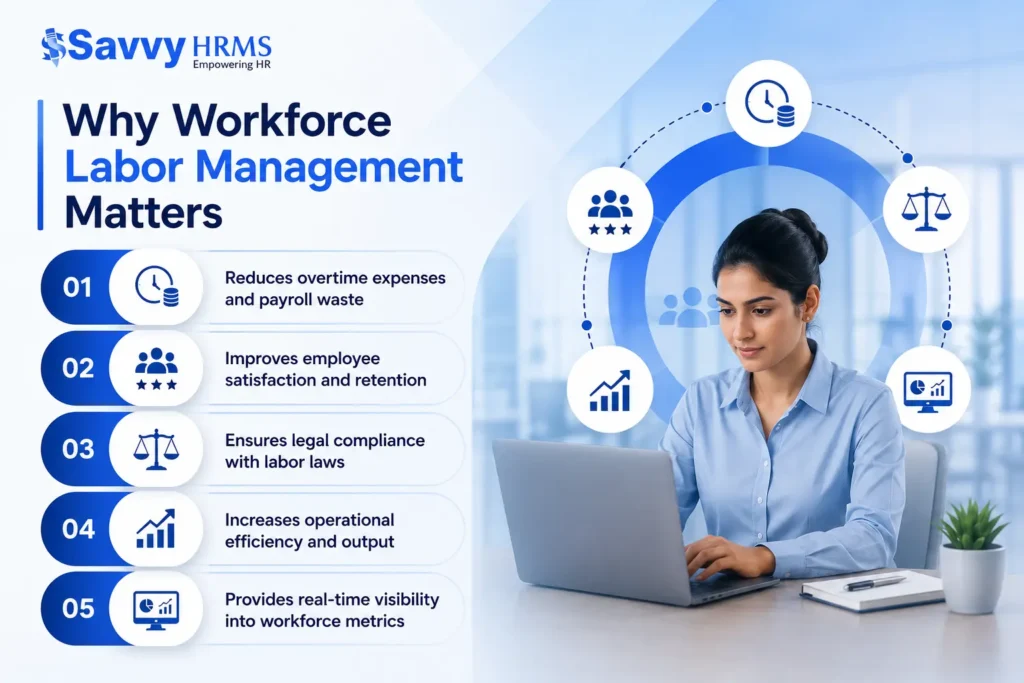
- Reduces overtime expenses and payroll waste
- Improves employee satisfaction and retention
- Ensures legal compliance with labor laws
- Increases operational efficiency and output
- Provides real-time visibility into workforce metrics
The stakes are highest in industries with variable demand-retail, hospitality, healthcare, and manufacturing. But every organization-from nonprofits to tech companies-benefits from smarter labor strategies.
The 5 Core Strategies for Effective Labor Management
1. Master Demand Forecasting and Scheduling
Before you schedule a single shift, you need to understand your workload. Demand forecasting uses historical data, seasonal patterns, and business projections to predict staffing needs.
The better your forecast, the fewer gaps you have. Use your past three years of data to identify patterns. When does demand spike? When does it drop? Build your schedules around these realities, not guesses.
Many organizations still rely on spreadsheets for this work. A modern labor management system automates forecasting and generates optimized schedules in minutes, not days.
2. Implement Real-Time Attendance and Labor Tracking
You can’t manage what you don’t measure. Real-time tracking of attendance, breaks, and task time gives you accurate data on how labor is actually being deployed.
Outdated manual systems create compliance risks and billing errors. Employees punch in and out, but the data lives in a filing cabinet. Digital systems capture attendance data instantly and sync it with payroll and project costing.
Key metrics to track:
- Clock-in/clock-out accuracy
- Break compliance
- Overtime hours and patterns
- Absenteeism and tardiness trends
- Labor cost per task or project
Transparency here reduces disputes and improves accountability across the team.
3. Optimize Labor Resource Allocation
Once you know your demand and have attendance data, the next step is matching people to work intelligently. Labour resource management means assigning the right skill set to each task while balancing workload fairly.
This isn’t just about availability-it’s about capability. A customer service representative can’t debug code. A junior developer shouldn’t lead a critical architecture decision alone.
Map your team’s skills, certifications, and experience levels. Use this matrix to build schedules that match task complexity to capability. Over time, this reduces errors, accelerates delivery, and builds confidence in your assignments.
4. Manage Contract and Temporary Labor Strategically
For many organizations, contract labour attendance system capabilities are mission-critical. Contract workers, freelancers, and temporary staff add flexibility but also complexity.
Track their hours, verify certification compliance, manage payroll in real-time, and ensure contracts align with actual work. A dedicated system prevents overspending on temporary staff and keeps compliance audits straightforward.
Document work performed, hours logged, and any issues. This becomes your proof of engagement if disputes arise later.
5. Use Data-Driven Workforce Analytics
Numbers tell stories. By analyzing labor data systematically, you uncover opportunities to improve workforce productivity and operational margins.
Track metrics like:
- Labor cost as a percentage of revenue
- Overtime as a percentage of total hours
- Utilization rate (how much of scheduled time is billable/productive)
- Turnover rate and tenure trends
- Absence rates by department or role
When you spot patterns-like one department with chronic overtime or high turnover in a specific role-you can act. Maybe hiring one more person saves three times that salary in overtime. Maybe a training gap is causing rework.
Data-driven decisions beat gut instinct every time.
How to Implement Labor Management Best Practices
Step 1: Audit Your Current State
Start by documenting your existing labor management processes. Where is data living? How are schedules created? What tools are in use?
Interview your team. What’s broken? What’s working? Where do errors happen most often? This audit reveals your true pain points.
Step 2: Select the Right Tools
A robust workforce management software solution handles scheduling, attendance, payroll integration, and analytics in one place. This eliminates data silos and reduces manual work.
Look for software that:
- Integrates with your payroll system
- Supports mobile clock-in for remote workers
- Provides real-time dashboards and alerts
- Automates compliance reporting
- Allows customization for your industry
Step 3: Train Your Team Thoroughly
New tools fail when teams don’t understand them. Invest in training-not just on “how to use the button” but on why the new process matters.
Managers need to understand how to read scheduling data and make adjustments. HR teams need to know how to pull compliance reports. Employees need to understand the clock-in process and why it matters.
Step 4: Roll Out Gradually
Start with one department or location. Let them become comfortable with the new system. Capture feedback. Refine your processes. Then expand.
A phased approach reduces disruption and gives you time to troubleshoot issues before they become organization-wide problems.
Step 5: Monitor, Measure, and Iterate
Set baseline metrics before you launch. Then measure the same metrics after implementation. Did labor costs decrease? Did overtime drop? Did compliance improve?
Review data monthly. Adjust scheduling logic, forecast assumptions, or team assignments based on what the data shows.
Common Labor Management Mistakes to Avoid
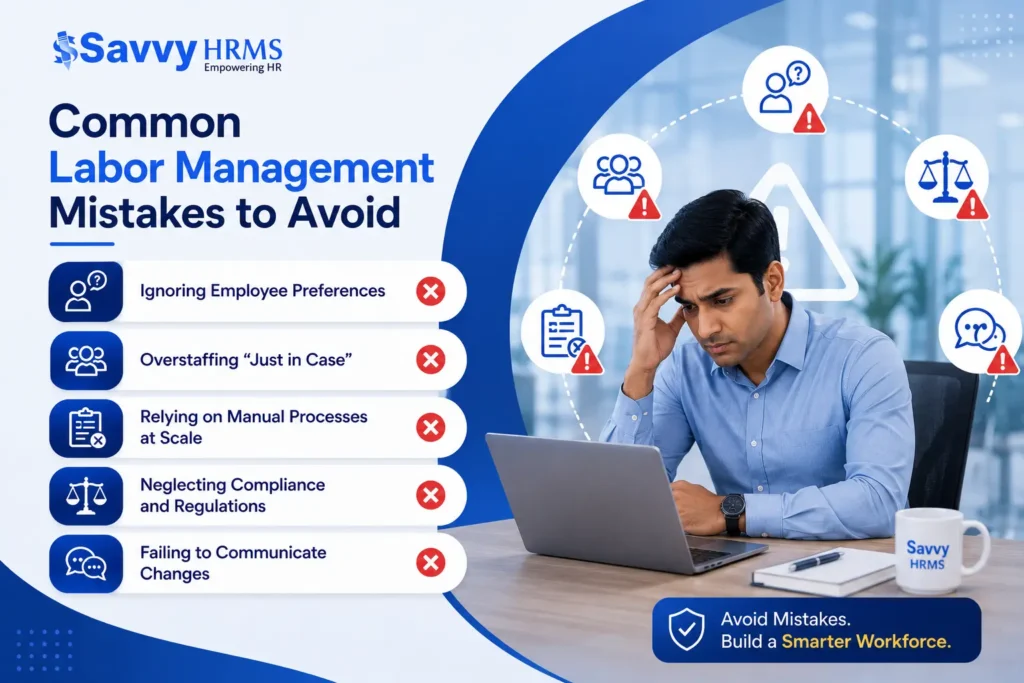
Ignoring Employee Preferences
Schedules that ignore employee preferences fuel resentment and turnover. Yes, business needs come first-but acknowledging preferences where possible builds loyalty.
Overstaffing “Just in Case”
It’s tempting to staff above forecasted demand to avoid understaffing risk. But overstaffing wastes payroll and creates busywork. Trust your data.
Relying on Manual Processes at Scale
Spreadsheets and whiteboards don’t scale. They’re error-prone and eat management time. Move to a system built for labor management early, not after a crisis.
Neglecting Compliance and Regulations
Labor laws vary by location, role, and industry. Missing overtime rules, break requirements, or certification deadlines creates legal exposure. Compliance should be automated, not manual.
Failing to Communicate Changes
New labor management approaches affect everyone. If your team doesn’t understand the why, they’ll resist. Communicate early and often.
People Also Ask: Labor Management FAQs
What’s the difference between labor management and workforce management?
These terms are often used interchangeably, but there’s a subtle distinction. Workforce management is the broader discipline covering planning, scheduling, and optimization across all business functions. Labor management focuses specifically on labor costs, scheduling efficiency, and compliance. Think of labor management as a subset of workforce management.
How can we reduce labor costs without cutting headcount?
Reduce waste through smarter scheduling, cross-training to improve flexibility, and automation of repetitive tasks. Better forecasting prevents overstaffing. Tracking productivity metrics identifies inefficiencies. Many organizations cut 10–15% from labor costs just by eliminating unnecessary overtime and improving utilization.
What metrics matter most in labor management?
Start with labor cost percentage (labor cost ÷ total revenue), overtime hours, utilization rate, and absence rate. These four metrics tell you whether you’re staffing efficiently and whether your team is engaged. Add turnover rate if retention is a concern.
Final Thoughts
Workforce labor management isn’t a set-it-and-forget-it initiative. It’s an ongoing discipline that requires the right mindset, the right team, and the right tools.
When you optimize your labor strategy-balancing demand forecasting, real-time tracking, smart allocation, and data-driven decisions-you unlock operational efficiency that directly affects your bottom line and your team’s morale. The best organizations don’t see labor management as a cost center. They see it as a competitive advantage.
Ready to streamline your labor management?
Start by upgrading your skills, exploring emerging roles, and positioning yourself for high-impact opportunities today.
Book a Demo Today