Managing employees is one of the biggest challenges for any organization. A company’s success depends on recruiting the right people in the right roles. But finding, developing, and retaining the right talent is not easy, and because of that Talent Management System (TMS) comes into play.
In this guide, we will cover:
- What does talent management means
- Its importance for organizations
- Key objectives
- How talent management software works
- Benefits, examples, and best practices
- Leading talent management companies in India
- Future trends in talent management
Everything is explained in simple, natural English, so even someone new to HR can understand it easily.
What does a Talent Management System means?
A Talent Management System (TMS) is a software platform that helps organizations manage their employees efficiently. It connects all HR processes from hiring to training, performance tracking, and career growth.
In simple words:
A Talent Management System (TMS) is like a digital assistant for HR teams. It simplifies tasks, reduces errors, and provides data-driven insights for better decision-making.
Without a TMS, HR teams spend hours on paperwork, spreadsheets, and manual processes. With a TMS, all these tasks are automated, and HR can focus on strategic initiatives.
Why Is Talent Management Important?
The importance of talent management goes beyond HR convenience. Employees are the most valuable asset of a company. Companies with strong talent management practices perform better, retain employees longer, and grow faster.
Here’s why it is important:
1. Attracting the right talent:
A well-structured talent management process ensures that companies hire candidates with the right skills and attitude.
2. Reducing hiring mistakes
Wrong hires cost time, money, and productivity. A TMS helps filter resumes and assess candidates more accurately.
3. Developing employee skills
Continuous learning opportunities help employees improve performance and stay motivated.
4. Boosting engagement and retention
Employees who feel valued, supported, and rewarded are less likely to leave.
5. Building future leaders
Talent management identifies high-potential employees and prepares them for leadership roles.
6. Data-driven decision-making
Real-time analytics help managers make better decisions on promotions, rewards, and workforce planning.
In short, effective talent management is the backbone of any successful organization.
What are the Main Objectives of Talent Management
The main goals of talent management go beyond just hiring and training employees. They are focused on building a skilled, motivated, and high-performing workforce that can drive the company forward. Here’s a closer look at the key objectives:
1. Hiring the Right People
The first and most important objective is to attract and recruit employees who have the right skills, experience, and attitude for the company. Talent management ensures that hiring is not just about filling positions, but about finding individuals who fit the company culture, values, and long-term goals. This reduces hiring mistakes and ensures employees are productive from day one.
2. Developing Skills
Once the right talent is onboard, it’s essential to invest in their growth. This includes providing structured training programs, learning opportunities, certifications, and skill-building workshops. Developing employees’ skills helps them adapt to changing business needs, take on new responsibilities, and achieve both personal and organizational goals.
3. Increasing Engagement
Engaged employees are more productive, loyal, and motivated. Talent management focuses on creating a work environment where employees feel valued, heard, and recognized. This can include feedback systems, reward programs, mentorship opportunities, and team-building activities. A highly engaged workforce drives better performance across the organization.
4. Preparing Leaders
A key objective of talent management is identifying high-potential employees who can take on leadership roles in the future. By providing leadership training, mentoring, and career development programs, companies can build a strong pipeline of future managers, ensuring the organization remains competitive and resilient.
5. Enhancing Productivity
Talent management aims to optimize employee performance. By clearly defining roles, setting achievable goals, providing regular feedback, and recognizing achievements, employees can perform at their best. Higher productivity not only benefits the company but also helps employees feel accomplished and motivated.
6. Reducing Turnover
Employee turnover is costly and disruptive. One of the core objectives of talent management is to retain top talent by meeting their growth and engagement needs. Providing career development, recognition, and a positive work environment ensures employees are less likely to leave, reducing hiring costs and maintaining team stability.
7. Fostering a Positive Company Culture
Beyond individual goals, talent management aims to create a culture of collaboration, innovation, and continuous improvement. When employees are aligned with the company’s vision and feel supported, the entire organization becomes more agile, resilient, and ready to achieve long-term success.
How Does a Talent Management System Work?
A TMS connects all HR processes and simplifies employee management. Here’s a step-by-step breakdown:
1. Talent Acquisition
From posting jobs to screening resumes, scheduling interviews, and sending offer letters, a TMS automates recruitment. Advanced systems even use AI to match candidates to roles based on skills, experience, and cultural fit.
Example: A company receives 1,000 applications. The TMS filters the top 50 most suitable candidates in minutes, saving HR hours of manual work.
2. Onboarding
Once a candidate joins, a TMS provides a seamless onboarding experience:
- Sharing company policies and culture
- Assigning mandatory training courses
- Introducing employees to their team and manager
- Digitally completing forms and documentation
A smooth onboarding process helps employees feel confident and valued from day one.
3. Performance Management
TMS tracks performance continuously rather than only during annual appraisals. Features include:
- Goal-setting (OKRs, KRA and KPIs)
- Real-time feedback from managers
- 360-degree assessments
- Performance scorecards
Employees know exactly what is expected and can improve continuously.
4. Learning & Development
Talent management software includes learning modules to help employees grow:
- Online courses, workshops, and certifications
- Personalized learning paths
- Skill-gap analysis
- Progress tracking and reports
Employees continuously upgrade skills, which improves productivity and satisfaction.
5. Career Development & Succession Planning
A TMS helps identify high-potential employees for promotions and leadership roles. It tracks:
- Performance history
- Skills acquired
- Career goals
Companies build a strong leadership pipeline without relying on external hires.
6. Employee Engagement
Modern TMS tools offer engagement features:
- Surveys and polls
- Recognition and rewards programs
- Feedback loops and performance check-ins
Engaged employees are motivated, loyal, and more productive.
Benefits of a Talent Management System
Investing in a talent management system brings many advantages to organizations, making it one of the most valuable tools for HR teams. Here’s why companies rely on TMS:
1. Centralized Employee Data
All employee-related information, from personal details to performance records and training history, is stored in one place. This centralized system eliminates scattered spreadsheets and manual files, making it easier for HR teams to access, update, and analyze data whenever needed.
2. Faster Recruitment
With AI-powered resume screening, automated candidate ranking, and interview scheduling, a TMS dramatically reduces the time-to-hire. Companies can focus on the best-fit candidates quickly, improving hiring efficiency and reducing costs.
3. Improved Employee Development
A TMS tracks each employee’s skills, strengths, and weaknesses, providing personalized learning paths and training recommendations. This ensures employees continuously improve and stay up-to-date with industry trends, boosting their confidence and performance.
4. Enhanced Performance Management
Traditional yearly appraisals are often ineffective. A TMS allows real-time performance tracking, continuous feedback, and goal management, which motivates employees and improves overall productivity.
5. Higher Retention Rates
Employees are more likely to stay in companies that value their growth and recognize their contributions. A TMS helps HR identify employees at risk of leaving, offer career development opportunities, and implement engagement programs.
6. Better Decision-Making
A TMS provides HR and management teams with data-driven insights into workforce trends, skills gaps, and performance metrics. This allows companies to make informed decisions regarding promotions, succession planning, and strategic workforce development.
7. Stronger Company Culture
A TMS encourages recognition, transparency, and continuous feedback, which helps build a positive and collaborative company culture. Employees feel more valued and connected to the organization’s goals.
8. Future-Ready Workforce
A TMS identifies high-potential employees and emerging leaders, enabling organizations to plan for succession and future workforce needs. It ensures the company is always prepared for growth and change.
9. Time and Cost Savings
By automating repetitive HR tasks like payroll, attendance tracking, and report generation, a TMS saves both time and money. HR teams can focus on strategic initiatives rather than administrative work.
10. Compliance and Risk Management
A TMS ensures that employee records, payroll, and performance evaluations are accurate and compliant with labor laws. It reduces the risk of errors or legal issues related to employee management.
Top Talent Management Companies in India
If you are looking for a talent management company in India, choosing the right provider is crucial. These companies offer advanced talent management systems that help organizations manage recruitment, performance, employee engagement, learning, and career development all from a single platform.
Here are the top 5 talent management companies you should consider:
1. Savvy HRMS
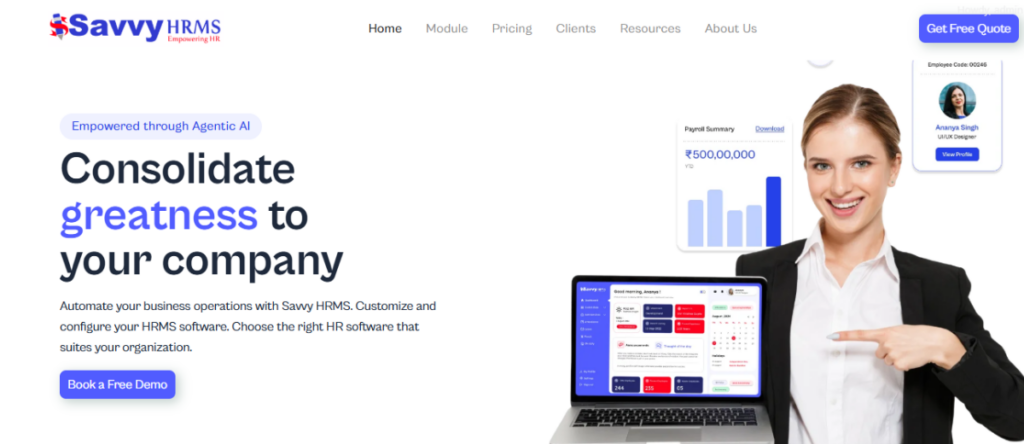
Savvy HRMS is one of India’s leading talent management platforms. It is AI-powered and designed specifically for Indian businesses. The platform covers recruitment, performance management, learning, engagement, and succession planning. It also provides real-time analytics, helping HR teams make smarter decisions. Small, medium, and large enterprises rely on Savvy HRMS for streamlined HR processes and improved employee experience.
2. Darwinbox
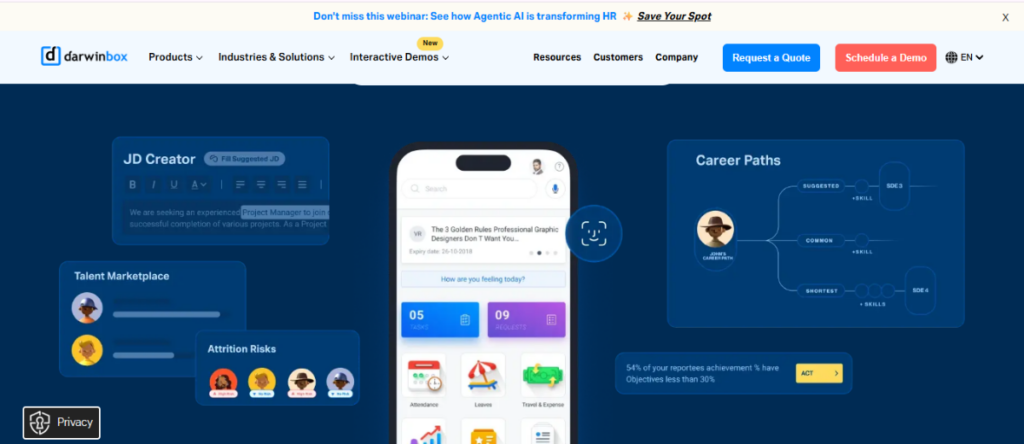
Darwinbox is a modern cloud-based HR and talent management solution. It offers recruitment, onboarding, performance management, a learning management system, and employee engagement tools. Darwinbox also emphasizes data-driven decision-making with predictive analytics, helping companies identify future leaders and retain top talent.
3. Zoho People
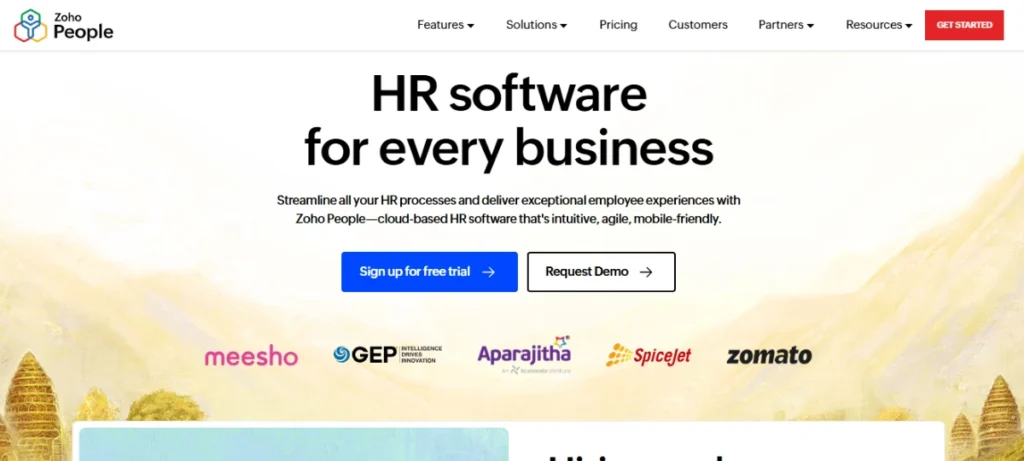
Zoho People is a popular HR software for small and medium-sized businesses. Along with core HR functions, it provides talent management features such as performance appraisal, skill development tracking, and learning management. Its user-friendly interface and mobile app make it ideal for companies with remote or hybrid teams.
4. Keka HR
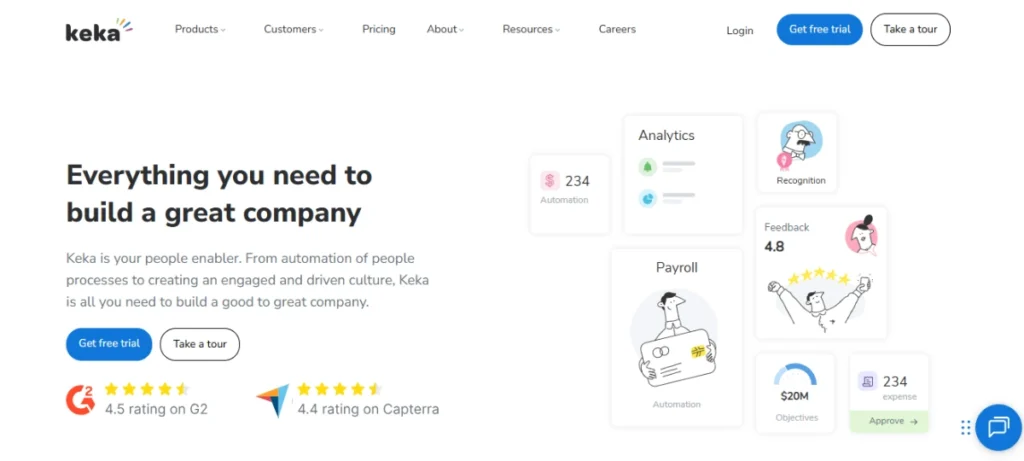
Keka HR is a comprehensive platform that combines HR, payroll, and talent management. It allows companies to manage recruitment, onboarding, performance evaluations, employee development, and engagement programs. Keka HR is known for its automation capabilities and real-time analytics, which help HR teams save time and reduce errors.
5. SAP SuccessFactors
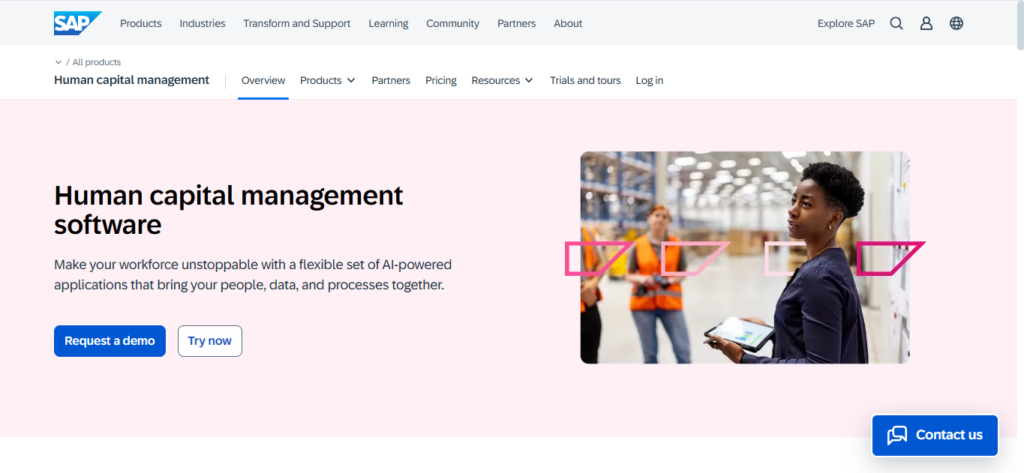
SAP SuccessFactors is a globally recognized HR and talent management software used by large enterprises in India. It covers core HR, recruitment, learning and development, performance management, and succession planning. With advanced analytics and AI-driven insights, SAP SuccessFactors helps organizations make strategic decisions about talent development and retention.
When choosing a talent management company, look for a platform that is scalable, user-friendly, and equipped with analytics. A solution like Savvy HRMS can serve both startups and large enterprises, making it highly versatile.
Conclusion
A Talent Management System is more than just software it is a strategic tool that empowers HR teams, employees, and companies to grow together.
With the right TMS, companies can:
- Hire the right talent quickly
- Develop employee skills continuously
- Retain employees longer
- Build future-ready leaders
- Enhance overall productivity and company culture
For businesses looking for a reliable and advanced solution, Savvy HRMS stands out as a complete talent management platform. It offers features like recruitment automation, performance tracking, learning management, employee engagement tools, and workforce analytics, making it easier for organizations to manage talent efficiently and drive growth.
Whether you are a small startup or a large enterprise, investing in a talent management system like Savvy HRMS is no longer optional it is essential for long-term success.