

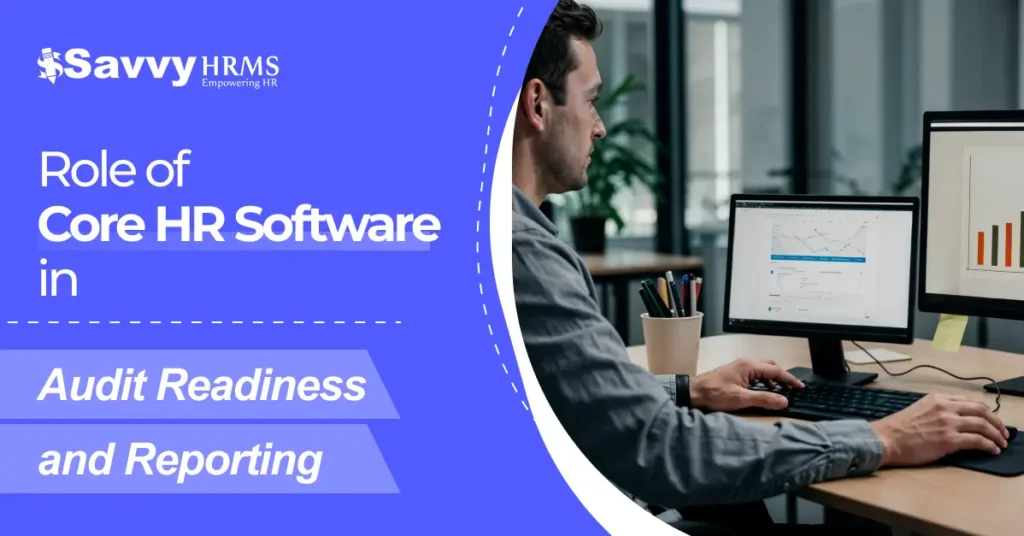

Organizations now have audit readiness high on their priority list if they want to uphold compliance, operational credibility, and transparency. When it comes to HR audits, this means having accurate employee records, flawless payroll processing, properly validated attendance records, and thorough documentation supporting performance. However, when HR data is broken across multiple spreadsheets or maintained manually, preparing for an audit can quickly become an exhausting attempt that’s both lengthy and complicated.
The proper application of a core HR software solution allows organizations to centralize their employee information and automate key HR processes, so they can always be audit-ready. Solutions that integrate essential HR processes such as attendance, leave, payroll, and performance management help provide accurate reporting, increased compliance, and faster response times during audits, all of which can be achieved without the need to scramble at the last minute.
What is Core HR Software?
Core HR Software is a single digital solution to keep track of and manage basic employee details and basic HR processes within one organization. Core HR Software provides a central repository for employee data (which covers the full life of the employee from hiring to day-to-day workforce management to compliance to separation from the organization) and therefore provides an organization with a “single source of truth” for that employee’s information.
Key Features of Core HR Software:
- Create and maintain a centralized master employee record.
- Store all employee-related digital documentation and files.
- Manage the entire life of the employee, including onboarding to separation.
- The ability to create and maintain an organization’s structure and assign roles.
- Track whether employees have acknowledged and are complying with the organization’s policy.
- The ability to automate HR processes.
- Create and enforce role-based access and other data security.
- The ability to create and produce HR reports in real-time and maintain documentation for audit purposes.
Understanding Audit Readiness in HR
The term “audit readiness” means that an organisation has the capability to supply precise, comprehensive, and compliant records when needed, without the need for last-minute data collection or changes to existing information. In the field of HR, typical areas of audit include the following:
- Employee records and documentation
- Attendance records and hours worked
- Amount of leave taken and approved leave time
- Payroll processing and statutory deductions
- Performance evaluation and appraisal records
- Adherence to labour law and company policies
If an organisation has not kept accurate HR records, it can be subject to legal fees, damage to reputation, and loss of trust by contributors. A digital-first HR system greatly minimises these types of risks.
Why Core HR Software Is Important for Audit Readiness?
1. Centralized and Accurate Employee Data
During an audit, HR professionals are required to provide employee data such as appointment letters, KYC documents, job roles, compensation structure, and employee history. Core HR software stores all this information in a single, secure digital place.
Benefits:
- No dependency on spreadsheets or paper files.
- Easy retrieval of employee records.
- Reduced risk of missing or outdated data.
Auditors can quickly verify records, improving audit efficiency and credibility.
2. Real-Time Compliance Tracking
Labor laws and statutory requirements quickly change. Core HR software helps organizations stay compliant by tracking:
- Statutory eligibility
- Policy acknowledgments
- Mandatory documentation
- Employee classification
Automated compliance alerts ensure that gaps are identified early, long before an audit starts.
3. Enhanced Accuracy and Consistency
HR that depends on manual processes faces issues ranging from duplicating or mismatching versions of data to making incorrect calculations. On the other hand, core HR platforms do not exhibit any of these types of issues while providing consistency across multiple areas of human resources.
Any time an employee updates their information, that will automatically be reflected in attendance, leave, payroll, and how we evaluate their performance. Therefore, this accuracy is important in meeting the expectations of an auditor and avoiding compliance errors.
4. Real-Time and Audit-Ready Reporting
Core HR platforms have real-time reporting capabilities that enable customized reports upon which to depend for fulfilling producer audits. Customizable reports can be created in an instant and can include headcounts, employee classification-specific reports, compliance status reports, and document reports.
By having access to reports available in real time, auditors will have confidence in the results of the internal and external audit processes while also reducing preparation time and eliminating the need for manual data compilation.
5. Data Security and Audit Trail Completion
Data security and data traceability are two of the most important components associated with any HR audit. Core HR systems will provide complete documentation regarding access controls, encrypted data storage, and detailed audit trails that provide details on what changes were made to employee records over time.
These features will provide evidence of accountability and protect all sensitive information related to employees while also demonstrating strong governance practices to auditors.
Role of Attendance Management Software in Audit Reporting
Correct attendance data is an important component of HR audits, especially for wage compliance, overtime calculation, and labor law adherence.
How Attendance Management Software Helps?
Attendance management software digitally records employee working hours using biometric systems, mobile apps, or web-based check-ins. The employee data stored is automatically synced with payroll and HR systems.
Audit advantages:
1. Secure Attendance Tracking
Digital attendance recording eliminates all forms of interference with and modification of attendance data, and further ensures there will be no manipulation by employees or manual errors in the attendance data collected. This results in reliable attendance records that can be verified to meet audit compliance requirements.
2. Accurate Time and Shift Tracking
Automated attendance recording provides auditors with a simple way to confirm that employee time worked, shift start and stop times, and breaks were correctly recorded.
3. Transparent Overtime Calculations
All overtime hours are calculated digitally, which results in employees being reviewed for the fairness of pay, clear documentation of how overtime hours are calculated, and easy reference and confirmation of employees receiving correct payment amounts when verifying an employee’s overtime payment history through payroll and labor audit processes.
4. Compliance with Work Time Laws
Working time adherence can be easily tracked for audit compliance against maximum daily hours, minimum rest periods, and minimum statutory weekly time off required by employee labor laws.
5. Payroll Data Connection
All attendance data will flow smoothly to the payroll system digitally, eliminating the need for manual reconciliation and manual matching of payroll data against all attendance data.
6. Easy Access to Historic Attendance Data
All attendance history records can easily be retrieved digitally, thus making it quick to retrieve past attendance records to verify audit findings and for use in long-term compliance reporting.
Role of Leave Management Software in Audit Readiness
Leave records are often studied during HR audits to ensure compliance with company policies and statutory leave laws.
Benefits of Leave Management Software
1. Timely Leave Balances
Automated leave calculations help maintain employee leave balances that are accurate and prevent human error & any disturbances during HR audits.
2. Transparency in Approval Workflow
Recording all leave requests, approved or denied, produces a clear audit trail of what leaves have been requested & granted, along with compliance documentation to support verification.
3. Quick Access to Past Leave
Leave management systems securely archive past leave records to allow an auditor to easily assess leave trends & use history.
4. Compliance with Statutory Leave
Statutory leave rules will automatically be enforced by the system, resulting in compliance with all statutory requirements.
5. Connection Between Approved Leave Data & Payroll Software
Upon approval of leave, the approved leave data is automatically synchronized into the payroll functions. This process will improve the accuracy of payroll calculations and reduce the chances of audit errors due to leave deductions.
How Payroll Software Ensures Audit-Ready Compliance?
Payroll audits are among the most sensitive and detailed HR audits. Errors in payroll processing can result in costly penalties and legal actions. Key audit-friendly features include:
1. No mistakes in Payroll Processing
When payroll is processed automatically, manual errors decrease, resulting in accurate salary payments; also, payroll records are reliable during audits.
2. Automated Calculation of Statutory Compliance
Payroll software will automatically calculate the PF, ESI, TDS & other statutory deductions, which ensures compliance with statutory requirements.
3. System-Generated Payslips and Tax List Reports
System-generated payslips and tax list reports provide the same documentation through a single source and are supported to help with transparent verification of payroll during an Audit.
4. Detailed Payroll Audit Trail
All payroll actions are recorded digitally and give the auditor a complete audit trail of all changes, approvals, and pay revisions made within a payroll period.
5. Easy Integration of Attendance and Leave Data
When payroll software integrates with attendance and leave data, the salary calculated will accurately represent hours worked and used for leave.
6. Secure Payroll Data Storage
Payroll data is stored securely with controlled access, which helps to protect sensitive information while still allowing companies to have audit-ready payroll documentation.
Why HR System Integration Is Essential for Accurate Audits?
When core HR software is integrated with attendance, leave, payroll, and performance management systems:
1. Centralized HR Data Management
Employees’ data from multiple departments is centralized when all the data from each HR Department is brought together into a single, integrated system, which helps provide consistency and will also help reduce errors during the annual audit verification process.
2. No Need to Manually Reconcile Data
In an integrated system, no manual reconciliation of data is necessary, which reduces the number of times employees are paid incorrectly and also reduces the time spent preparing for audits due to the elimination of the need to manually reconcile data.
3. Data Flow is Consistent Across All HR Modules
Using real-time data synchronization allows all attendance, payroll, and leave records to be in sync with each other at all times, which improves the accuracy of the data and provides greater confidence in the audit process.
4. Quick Access to Audit-Ready Reports
An integrated system provides instant, consolidated HR reports to auditors for quick access to accurate and complete data required to perform their audit.
5. Easier Compliance Tracking and Validation
Merged HR platforms automatically ensure compliance with statutory requirements and allow organizations to demonstrate compliance with applicable labor laws during an audit.
6. Easily Traceable and Documented Audit Trails
An integrated workflow provides complete audit trails between HR systems for a clear and transparent record of all transactions, approvals, and changes made.
7. Reducing the Risk of Noncompliance
Data integration significantly reduces the possibility of errors in payroll calculations and ensures payroll accuracy, thereby reducing the risk of compliance issues discovered through an audit.
What are the Types of Audit-Ready Reports?
1. Employee Headcount and Attrition Reports
To provide accurate head count and employee turnover numbers for Audit to review labor trends, job security status, in conjunction with audits, to determine future planning needs of staffing.
2. Attendance and Overtime Reports
Detail hours worked by each employee, shift specifications, and calculate overtime for Audit to determine if employers are in compliance with wage laws and labor regulations.
3. Leave Utilization Reports
Log employee usage of leave and leave balances. Allows Audit to verify company policies regarding leave usage and any applicable statutory leave requirements.
4. Payroll Compliance and Statutory Reports
Give detailed salary Structure, benefits, and withholding taxes; in addition, indicate if all pay and benefits paid to employees meet standards for accuracy and comply with applicable laws.
5. Performance and Appraisal Reports
Shows goals, evaluations, and ratings given to employees; provides Audit information on the fairness and openness of the company policy for managing employee performance.
What are the Business Benefits Beyond Audit Readiness?
1. Improved HR Operational Efficiency
Automated systems eliminate manual HR tasks, allowing HR teams to dedicate their time to strategic activities (such as workforce planning) and improving employee engagement.
2. Better Decision-Making Through HR Analytics
Real-time, analytical data from HR provides the business with the information necessary to make better-informed decisions in areas such as hiring and performance management, as well as optimizing the workforce.
3. Enhanced Employee Experience and Transparency
Access to self-service employee attendance, leave, and pay information increases transparency in the workplace and helps to establish trust and increase employee satisfaction.
4. Stronger Compliance and Risk Management Culture
Using an automated compliance system creates a culture of proactive compliance and risk management to reduce an organization’s risk of exposure to legal action and ensure continued compliance with regulations.
5. Scalability for Growing Organizations
Scalable, strong HR software can help accelerate the business to absorb more of the complexity associated with a growing workforce (and without having to incur any additional administrative burden or reduce efficiencies through workforce growth).
6. Reduced HR Costs and Operational Risks
By automating processes, there is a significant reduction in error rates, rework, and penalties, resulting in significant cost savings for organizations and a reduced risk of compliance-related penalties.
How to Choose the Right Core HR Software for Audit Compliance?
When selecting a core HR solution, organizations should look for:
Step 1. Evaluate Your Organization’s Audit and Compliance Requirements
Before you evaluate any core HR software, determine your organization’s unique audit requirements and compliance obligations:
- Audit types (internal, statutory, and external)
- Labor laws and regulations that apply to your organization
- Records retention and documentation requirements
- Frequency and compliance of reporting
- Industry-specific compliance needs.
Step 2. Look for Strong Core HR Functionality
You need to ensure that the software has sufficiently strong core HR functionality to provide a solid foundation for both your audit readiness and your reporting accuracy. Make sure the software has:
- Centralized employee master file
- Digital document management
- Employee lifecycle tracking
- Role and position mapping
- Policy acknowledgement documents
Step 3. Ensure Smooth Integration Capability
Choose a core HR software that provides smooth integration capability with the other HR software used by your organization so that you can maintain data consistency and audit accuracy:
- Attendance management software integration
- Leave management software integration
- Payroll software integration
- Performance management software integration
- Real-time data flow across all modules of your HR software
Step 4. Assess Compliance Automation Features
An HR software solution that is always ready for an audit will use a proactive approach to manage compliance, rather than manually tracking items and following up on them:
- Automated application of statutory rules.
- Compliance alerts and notifications.
- Built-in compliance checklists.
- Policy enforcement mechanisms.
- Support for updates to regulations.
Step 5. Evaluate Reporting and Audit Trail Features
Comprehensive reporting and traceability are important for simplifying audits as well as providing visibility into the HR operation:
- Customizable audit-ready reports.
- Real-time HR Dashboards.
- Access to historical data.
- Logs of changes and approvals.
- Ability to export reports easily.
Step 6. Verify Data Security and Access Controls
An HR audit of a company’s HR system includes an evaluation of how secure employee data is stored and managed:
- Role-based access permissions.
- Data encryption standards.
- Secure document storage.
- Activity logs of system users.
- Compliance with data protection policies.
Step 7. Determine Scalability and Vendor Support
Choose the right solution that will grow with your organization and continue to support you during both the audit and system upgrade process:
- Scalable based upon growth of your workforce.
- Available through the cloud.
- Vendor goes through compliance testing.
- Regular updates for the software.
- Responsive customer service.
Conclusion
A strong HR technology system plays an important role in maintaining continuous audit readiness while simplifying everyday HR operations. By centralizing employee data, automating compliance, and enabling correct reporting across attendance, leave, payroll, and performance processes, organizations can reduce audit risks and enhance operational transparency.
Savvy HRMS delivers an integrated core HR software solution that simplifies compliance management, ensures data accuracy, and helps HR teams stay audit-ready with confidence.
Schedule a demo to discover how Savvy HRMS can simplify audit compliance and strengthen your HR processes.