

Geo-Fencing for Field Teams: Why Companies Are Rapidly Adopting It


-
AuthorRuchika Rajput
-
 Last Updated
December 27, 2025
Last Updated
December 27, 2025
-
 Reading Time
13 Mins
Reading Time
13 Mins
Managing Field employees Has Always Been Difficult. Unlike Office employees, Field teams work on Multiple Sites at the Same Time with Dynamic Schedules, often with Little or No Direct Supervision. Given this Environment, Companies Have a Real Concern About Productivity, Accountability, and Attendance Accuracy for Their Field Employees.
Geo-Fencing Has Changed the Way Companies Manage Field Employees. By Establishing Virtual Boundaries Around Work Locations, Companies Can Now Monitor Attendance, Movement, and Task Completion in Real-Time, without supervising their employees.
As Remote and Hybrid Working Models Increase, and Field Services Expand, Geo-Fencing has developed from being an Extra Benefit to a Business Necessity. Let’s look at How Geo-Fencing Works and What It’s All About, along with Why So Many Companies Are Rapidly Integrating Geo-Fencing Technology Into Their Business Strategies, Especially With complete Solutions Like Savvy HRMS!
What Is Geo-Fencing?
To understand its impact, let’s first explore the geo-fencing meaning.
Geo-fencing is a location-based technology that uses GPS, Wi-Fi, or mobile data to create a virtual boundary around a specific geographic area. When a device (such as a smartphone) enters or exits this boundary, a predefined action is activated.
In simpler terms, it is a digital perimeter set around real-world locations, such as offices, client sites, warehouses, or project areas, that helps track presence and movement automatically.
The geofencing meaning becomes especially powerful when combined with employee tools like a geofencing attendance system, where employee attendance is marked only when they are physically present at the assigned location.
How Is Geo-Fencing Used?
Geo-fencing is largely used across industries such as logistics, sales, construction, healthcare, and service management. Below are the key use cases explained with clarity.
1. Location-Based Attendance Tracking
Geofencing means employees check in only if they’re at the job site, no exceptions. That stops fake sign-ins completely. It blocks fake GPS tricks, too. Records stay real because they match where people actually are. No issues, no gaps, just what’s happening.
2. Automated Entry and Exit Logs
A virtual boundary tracks when employees arrive or leave, with no need for hand-logged entries. That means fewer mistakes while building solid records of hours worked, which smoothly feed into paychecks and performance reviews.
3. Task and Visit Verification
When employees go to client spots or job sites, geo-fencing checks if they’re really there. Completion of tasks is allowed only once the system verifies their position. This makes sure visits aren’t faked, boosts trust in service delivery, also strengthens responsibility tracking on the ground.
4. Real-Time Alerts and Notifications
Geo-fencing sends instant alerts to managers when employees arrive at or exit set spots. If someone skips a stop, leaves early, or goes somewhere they shouldn’t, notifications go out right away, so managers can respond fast while keeping things running smoothly.
5. Compliance and Safety Monitoring
In workplaces where access is limited or safety matters most, virtual boundaries keep staff inside allowed spots. Because of this, rules are followed more easily, dangers drop significantly, and records show clearly that procedures were respected at all times.
6. Prevention of Time Theft and Attendance Fraud
A geofenced attendance setup stops fake clock-ins by only logging time when someone’s actually at the right spot. Employees can’t log in from home or change their hours, which keeps things honest. This way, companies track who’s really there without confusion. Payroll gets clearer since records match the real presence.
7. Improved Workforce Productivity Tracking
Geo-fencing shows exactly how long employees stay at worksites instead of traveling around. So companies can spot wasted time, adjust work hours, also boost output; no need to keep checking in or following updates.
8. Enhanced Accountability for Field Teams
Once employees realize their location gets checked through geo-fencing, they tend to take more responsibility. Since tracking creates solid proof of where people are, showing up on time becomes more common, also improving how teams handle duties, especially in scattered or off-site teams.
9. Better Planning and Resource Optimization
Historical location tracking gives HR a clearer picture of how people move around, how often they stop by places, and where time really goes. With that insight, companies adjust routes, assign staff more thoughtfully, and stretch their resources further down the line.
How Geo-Fencing Is Useful for Field Employees?
Geo-fencing is also seen as a monitoring tool, as geo-fencing technology offers various benefits to field employees as well.
1. Hassle-Free Attendance Marking
When employees arrive at the set zone, their presence gets logged right away; no clocking in by hand is needed. As soon as they step into the mapped area, tracking happens on its own, removing mistakes while saving time.
This setup cuts down daily problems while giving staff more space to handle key tasks. Without needing managers or gadgets, clocking in becomes smooth, fast, yet solid, perfect for teams working off-site.
2. Transparent Work Records
Geo-fencing logs where employees are, using digital check-ins that anyone can verify. Employees see exactly when they arrived, how long they stayed, along with their travel path, so there’s less arguing about time on site. Instead of guessing, managers depend on real traces from mobile devices. The argument drops because everyone views the same timeline.
This kind of transparency keeps employees covered when audits hit, when managers check performance, or when pay gets discussed. Because logs confirm where tasks happened, staff trust more easily that what they do shows up correctly, without bias.
3. Reduced Administrative Burden
Geo-Fences built by location tech let employees skip the boring stuff, no more register updates, no need to message their managers about showing up, and fewer check-in calls later.
This removes paperwork, makes everyday tasks easier, and improves speed. Employees get to spend extra hours on meaningful jobs instead of filling out forms or answering check-in questions.
4. Fair Performance Evaluation
Geo-fencing checks if employees are really at the job site while doing their duties, so reviews reflect real activity. Because check-ins and visits get confirmed by GPS, managers rate the team based on solid proof instead of guesses.
This fairness drops guesswork and cuts out personal opinions. Employees get more fired up if reviews show actual results instead of uneven data or rough guesses.
5. Improved Trust and Autonomy
As soon as tracking happens on its own and stays clear, trust grows both ways, between employees and managers. Out-in-the-field teams sense real confidence since checks are fair, stable, yet never biased.
This trust lets employees handle tasks on their own while staying accountable. Rather than endless updates, they spend time getting real results done, hitting targets without slowing down.
6. Clear Work Boundaries and Expectations
Employees get a clear idea of their job areas and shifts through virtual boundaries. These set zones make it easier to know exactly when and where to check in.
This clear info helps prevent problems and mix-ups, and keeps teamwork running more smoothly. Employees get more done when they know what’s expected, especially if work-from-home or office rules are spelled out clearly.
7. Reduced Attendance Disputes
A geofencing setup logs attendance on its own; no one can adjust it after. That means fewer arguments about showing up late, forgetting to clock in, or hours being off.
Team at work gains when info is kept correct; this stuff acts like solid proof. Clashes with HR or pay teams drop off, thanks to clearer steps along the way, which pumps up how happy employees feel.
8. Better Work-Life Balance for Field Employees
Geo-fencing makes sure employees get credited just for the time they actually spend on site. That way, no extra hours sneak in by accident, also cuts down stress once the shift ends.
Teams who log hours right end up feeling more balanced between job and life. Once the day’s done, they switch off, no stress about timesheets or proof of effort.
Key Advantages of Geo-Fencing to Track Employees
From a management and HR perspective, geo-fencing offers several operational advantages.
1. Correct Attendance Data
A geofencing attendance setup stops employees from clocking in for each other, blocks false sign-ins, and prevents faking GPS spots by limiting access to approved areas. That way, records stay correct, untouched by management, show real employee arrivals, while building solid data for managing teams.
2. Enhanced Workforce Visibility
Geo-fencing lets managers see where employees are right now, how they move around, and what tasks they’re doing out in the field. Instead of calling or texting nonstop, team leads keep track of work status, notice holdups quickly, then adjust plans using up-to-the-minute info from daily operations.
3. Improved Productivity
Looking at location data, companies learn where time is spent. That way, they can modify travel paths, adjust timetables, or shift duties around, cutting downtime while improving team efficiency.
4. Reduced Payroll Errors
Fewer errors in pay come from solid tracking of where people clock in. When real-time check-ins use map zones, companies avoid wrong hour counts, so teams get correct salaries without delays. This cuts fights over extra shifts or missed minutes, keeping payouts smooth and trust high.
5. Stronger Accountability
Once employees’ location is confirmed using geofencing, they tend to take more responsibility. Because their arrival times and shifts show up clearly from real check-ins, team members out in the field usually arrive on time, while also staying more engaged.
6. Better Resource Planning
Historical location tracking helps HR and operations review how employees move around job sites. That way, they can assign staff more wisely, removing delays while improving shift coordination. Better prep happens naturally when schedules match real-world patterns across tasks or locations.
7. Prevention of Attendance Fraud
Geo-fencing stops fake check-ins by locking access to set locations. Employees can’t log time from far away, which keeps records honest and helps companies track who’s really where. This method supports correct reports without depending on trust alone.
8. Data-Driven Decision Making
Geo-fencing collects useful data about where things happen, helping managers make smarter choices. By spotting weak spots here or there, managers get a clearer picture of how teams are doing out in the field, thanks to actual travel and check-in habits. This lets them adjust plans on the fly, exchanging old methods for ones that fit better with what’s really going on.
9. Operational Cost Optimization
With clearer tracking of who’s where and when, geo-fencing cuts down on extra hours worked, wasted fuel, and misused tools. That means tighter budgets and smoother operations, especially for teams working off-site or far from the office.
Why Companies Are Rapidly Adopting Geo-Fencing?
The quick rise of geo-fencing comes from shifting job setups and growing on-site tasks, so better insights are needed. Companies now want simpler, faster methods that actually work when tracking teams.
Below are the key reasons behind this growing adoption.
1. Rise of Remote and Field Workforce
As organizations expand beyond traditional office spaces, several factors are driving the shift toward smarter employee tracking solutions:
- Growing dependence on sales, service, logistics, and field operations across various locations
- Limited physical supervision makes manual attendance tracking unreliable
- Increased need for location-verified work validation
- Expansion of hybrid and remote work models
- Demand for a flexible yet controlled employee monitoring
2. Demand for Real-Time Insights
To manage field operations efficiently, organizations increasingly require real-time operational insights, including:
- Immediate visibility into employee location and availability
- Live tracking of field activities and site visits
- Faster response to delays or missed assignments
- Data-driven decision-making based on real-time information
- Reduced dependency on manual status updates
3. Cost Optimization
By improving visibility and control over field operations, geo-fencing helps organizations achieve cost efficiency through:
- Reduced fuel expenses through better route and visit planning
- Prevention of unauthorized overtime claims
- Elimination of payroll errors caused by incorrect attendance
- Lower administrative and supervision costs
- Improved utilization of employees and operational resources
4. Compliance and Audit Readiness
Geo-fencing helps organizations meet regulatory and internal governance requirements by providing:
- Correct documentation of work hours and site presence
- Support for labor law and statutory compliance
- Clear audit records for internal and external reviews
- Reduced risk of policy violations
- Improved transparency in attendance and payroll processes
5. Digital HR Transformation
Modern HR ecosystems increasingly depend on geo-fencing to deliver:
- Shift from manual processes to automated HR systems
- Integration of geofencing attendance with the payroll and leave management system
- Centralized employee data across locations
- Improved accuracy and efficiency in HR operations
- Scalable solutions supporting organizational growth
6. Employee Experience Enhancement
From an employee perspective, geo-fencing significantly improves the overall work experience by providing:
- Hassle-free and automated attendance marking
- Transparent work records reduce disturbances
- Fair and unbiased performance evaluation
- Reduced reporting pressure on employees
- Increased trust through location-verified systems
How Savvy HRMS Helps with Geo-Fencing?
Savvy HRMS brings the power of geo-fencing technology into a complete and easy-to-use employee management platform. Combining location intelligence with smart HR automation helps organizations simplify attendance, improve visibility, ensure compliance, and manage field teams efficiently while maintaining transparency and employee trust.
1. Smart Geo-Fencing Attendance System
Savvy HRMS offers a strong geofencing attendance system that allows employees to mark attendance only when they are physically present within authorized locations. This removes proxy attendance, prevents location spoofing, and ensures highly correct and correct attendance records.
2. Customizable Geo-Fence Zones
Organizations can easily create and manage multiple geo-fenced areas such as offices, client sites, warehouses, or project locations. Flexible radius settings allow businesses to adapt geo-fencing rules based on operational requirements and real-world location restrictions.
3. Real-Time Dashboards and Reports
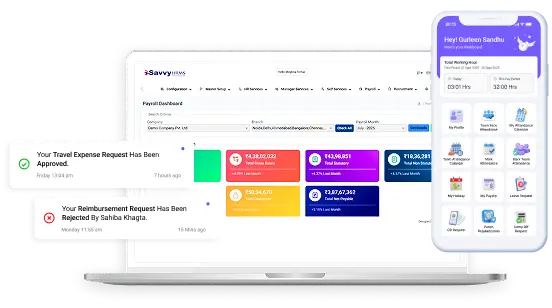
Savvy HRMS provides user-friendly dashboards that offer real-time visibility into attendance status, employee movement, and field activity. HR teams and managers can access correct reports instantly, enabling faster decisions and improved control over distributed employee operations.
4. Smooth Mobile Integration
The Savvy HRMS mobile application ensures smooth adoption of geo-fencing features for field employees. With a user-friendly interface and minimal training requirements, employees can easily use location-based attendance without disturbing their daily workflows.
5. Policy-Based Attendance Controls
Savvy HRMS allows organizations to configure attendance rules, work hours, overtime limits, and compliance policies based on company guidelines. These policy-driven controls ensure consistency, fairness, and compliance with internal and regulatory requirements across all locations.
6. Integrated Payroll and Leave Management
Geo-fencing attendance data in Savvy HRMS integrates smoothly with payroll software and leave management modules. Precise, location-verified attendance ensures correct salary calculations, reduces payroll errors, and simplifies leave tracking for HR teams.
7. Enhanced Compliance and Audit Readiness
With automated location logs and attendance records, Savvy HRMS helps organizations maintain strong compliance. Clear audit trails support labor law adherence, internal audits, and external inspections, reducing risks and improving governance across employee operations.
8. Improved Field Workforce Productivity
By offering real-time insights into employee presence and movement, Savvy HRMS enables better planning, monitoring, and performance evaluation. Managers can improve schedules, reduce free time, and enhance overall productivity without more supervision.
Conclusion
As organizations expand beyond traditional office spaces, managing field teams effectively has become a strategic priority. Geo-fencing offers a modern, dependable, and data-driven solution to track attendance, improve productivity, and ensure accountability without adding operational complexity.
Understanding the geo-fencing meaning and implementing the right geofencing attendance system empowers organizations to gain real-time visibility while maintaining employee trust. It bridges the gap between remote work flexibility and organizational control. With advanced features, user-friendly design, and smooth integration, Savvy HRMS enables companies to control the full potential of geo-fencing technology, making employee management smarter, faster, and future-ready.