Have you ever suffered from missed deadlines, unclear accountabilities, disorganized inboxes, and routine follow-ups, all of which reduce your team’s overall productivity?
In the fast-paced business world of today, people manually manage tasks using spreadsheets, chats, or emails, which creates additional challenges by hiding the clarity of information. As a result of not managing their workload effectively, many teams, not just yours, have an additional obstacle to overcome regarding prioritization, accountability, and progress tracking.
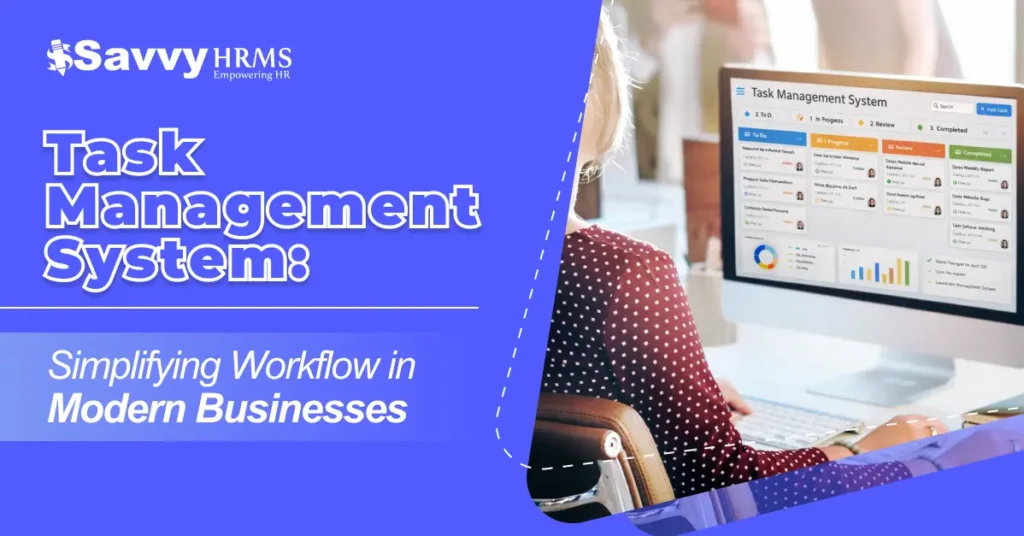
Now, to solve these issues (and many others), you will need to utilize a task management system. A good task management system will enable organizations to optimize their workflow, clarify accountability by assigning work tasks to team members, track performance, and guarantee that a project or assignment is accomplished from the planning stage through to the accomplishment of the project or task.
What is a Task Management System?
A Task Management System is a digital tool that can help an organization with task planning, assignment, tracking, and management. Centralize work processes, enhance collaboration, and improve and ensure accountability throughout all departments, whether integrated or stand-alone solutions like a performance management system, leave management system, attendance management, or payroll.
A task management system has several key components:
- Task creation and assignment
- Task due dates and priority
- Progress tracking and status reporting
- Collaboration and collaborative file sharing
- Task notifications and reminders
- Performance tracking dashboards
- Payroll & attendance management integration
Why is a Task Management System Important?
1. Clear Ownership of Tasks
A task management system allows for clear assignment of tasks and responsibilities to each team member; therefore, all employees know what they are required to do, when they are to do it, and how to perform the task without duplication of effort.
2. Enhanced Productivity
Employee productivity is improved through a task management system, allowing team members to concentrate on their job responsibilities, minimize distractions, and complete their assigned tasks, leading to a considerable increase in overall productivity within the organization.
3. Improved Time Management
Tasks are tracked through the task management system, and all team members are kept on track through reminders, deadlines, and calendar schedules, making it easy for employees to manage their workloads and avoid being rushed and missing deadlines at the last moment on a consistent basis.
4. Increased Accountability
Tracking the progress of tasks in real-time provides managers with the transparency they require to monitor the progress of tasks and to ensure that all employees are held accountable for getting their tasks completed on time.
5. Improved Collaboration
The task management system provides a centralized method of communicating with other teams and reducing the volume of emails that are sent, thus improving collaboration greatly.
6. Performance Monitoring with Data
Task management systems include performance management dashboards, which provide detailed information regarding employee productivity and the efficiency of employee workflow processes.
7. HR Processes Simplified
When leave management, attendance management, and payroll software are integrated with the task management system, tracking of completed tasks is important in managing an organization’s employee performance in relation to pay and compliance.
What are the Benefits of Using a Task Management System?
1. Organized Workflow Structure
With a task management system in place, you can create a clearly structured workflow, eliminating the confusion and disruption that occur when moving from one phase of a project to another smoothly.
2. Real-Time Progress Visibility
Managers can see the current status of each project, how resources are allocated, and what outstanding tasks need to be completed, allowing for improved decision-making processes.
3. Reduction in Delays to Operations
Using automated tasks to remind everyone and track the status of tasks helps to reduce any delays that may occur due to a lack of activity, so all projects will be completed within the expected time period.
4. Increased Level of Employee Engagement
Having specific goals and target metrics creates clarity for each employee and has been proven to assist in motivating employees to achieve continuous improvement.
5. Integrated Human Resources
Utilizing a workflow tool that integrates with a company’s performance, leave, and attendance management system allows for a complete view of the workforce.
6. Improved Resource Allocation
Managers have the ability to allocate resources based on actual workload data, improving overall productivity while reducing the risk for employees being overworked.
How to Implement a Task Management System in Your Organization?
Step 1: Determine Workflow Gaps
Review current operations to clarify current issues within existing workflows, find opportunities for standardization, and identify how a task management tool will help improve the collaboration and performance of workers.
Step 2: Set Measurable Targets
Determine how your company’s strategy can be broken down into measurable, quantifiable performance metrics so you can properly evaluate the success of implementation and whether you can achieve the financial objectives your company has set forth.
Step 3: Select the Rights Software
Evaluate scalable systems with all the necessary integration options (performance management, payroll, attendance tracking, leave management, etc.).
Step 4: Train Employees Effectively
Deliver a quality training program for your workforce to ensure that workers are properly operating the new technology and to minimise any fear of change.
Step 5: Continually Monitor and Improve
Use real-time data to assess how well the task management system is being utilised and continuously look to improve by collecting information from all users about how they have used the system.
What are the Challenges While Implementing Task Management?
| Challenge | Description | Solution |
| Resistance to Change | Employees may hesitate to adopt new systems. | Provide training, clear communication, and leadership support. |
| Lack of Proper Training | Poor understanding results in ineffective usage. | Conduct hands-on training and ongoing support sessions. |
| Integration Issues | Difficulty integrating with payroll software or HR systems. | Choose compatible software with seamless API integrations. |
| Data Migration Errors | Risk of losing important task data during transition. | Plan structured data relocation and backup strategies. |
| Overcomplicated Setup | Complex workflows confuse users initially. | Start simple and gradually expand system features. |
| Inconsistent Usage | Teams may revert to old manual methods. | Enforce system usage policies and regular monitoring. |
Why Savvy HRMS is the Best Choice?
Savvy HRMS is a complete task management system combined with your performance management system, attendance management, leave management, and payroll software. The result is an ideal solution for coordinating work and making your workforce as productive as possible.
Savvy HRMS is designed to meet the needs of today’s modern businesses by improving productivity, making it easier to track task completion, and giving you real-time data on your employees’ performance, while ensuring compliance and accuracy across all HR processes.
Reasons why you should select Savvy HRMS
- Integrated task management system
- Advanced performance management system
- Automated leave management
- Intelligent attendance management
- Fully integrated payroll software
- Real-time analytics dashboards
- Easy-to-use interface
- Scalable for growing companies.
Conclusion
A task management system improves company performance by making operations smoother, improving accountability, and increasing productivity levels. Savvy HRMS allows companies to combine their task tracking with other aspects of their business, such as performance management systems, leave tracking, attendance tracking, and payroll. All of this integrates easily together, which helps companies grow and continue to run better.