Running a team well is now key to handling people at work, changing how managers help employees learn new things, get noticed, or move up. Top organizations stand out by using smart setups that link each person’s efforts to what the company wants to achieve. So why do these methods matter so much when trying to stay ahead?
Companies today see how ongoing check-ins, instant updates, or clear metrics really help improve team motivation, along with company success. Yearly appraisals now feel slow, out of touch, while one-size-fits-all comments just don’t cut it anymore. Still using manual ratings that miss what your people can actually do?
Good performance tracking isn’t just about reviewing old results; it builds a habit of ongoing growth. No matter if you run a small team or a big company, using a solid method enhances profits by keeping people longer, getting more done, and helping the whole place succeed. But really, what’s performance management all about, and how could it help your team?
What is Performance Management Software?
Performance management software is an online system that helps companies handle reviews, goals, and growth tracking, all in one platform. Instead of paper files or Excel sheets, supervisors use them to keep info organized. This way, HR teams spend less time on admin tasks. They shift attention toward real talks about progress and skills. Goals get updated easily. Feedback happens more often. Teams stay aligned without any issues. Updates flow smoothly across levels.
Key Features and Benefits:
- Setting goals along with keeping an eye on progress
- Instant responses or ongoing checks
- Fewer manual tasks when checking job results
- Praise and prizes are built right in
- Fancy number-crunching combined with how well things run
- Smooth movement of information through the company
- Data-driven decision-making for compensation and promotions
- Finding chances to grow at work
- Reduced administrative burden for HR teams
- Clearer insights and a mindset focused on getting better over time
These connected systems build a full network where results move smoothly, helping managers choose wisely, so teams stay responsible and keep improving.
What are Performance Appraisals?
Performance appraisals are planned check-ins where managers look at how well someone does their job, what skills they’ve built, also where they can grow, usually once or twice a year. These sessions go over wins, strong points, areas needing work, along how the person acts within the team.
Core Components of Performance Appraisals:
- Goal review and achievement assessment
- Checking skills compared to the company rules
- Chat about progress and how well someone’s doing
- Records showing how employees do their jobs
- Thinking ahead about growing your career
- Finding what works well, also spotting where things could get better
- Behavioral contribution analysis
- Constructive feedback provision
Though performance reviews have long been part of HR work, they usually capture just one moment instead of tracking progress over time. Today’s evaluations often mix in feedback from colleagues, coworkers, and even the employees themselves, shifting away from depending only on managers. This blend gives a clearer picture by showing different sides of how someone contributes at work.
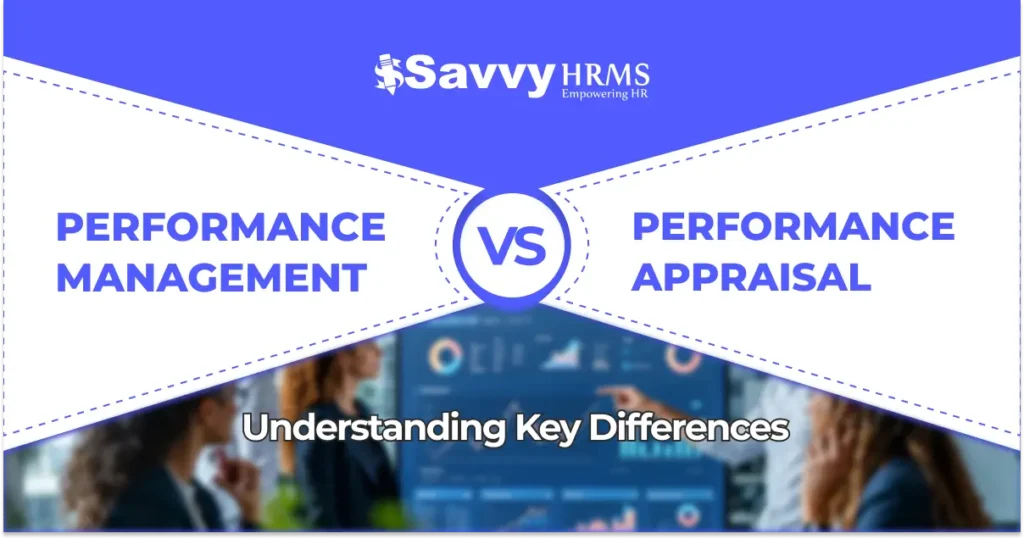
Difference between Performance Management Software and Performance Appraisals: A Detailed Comparison
| Aspect | Performance Management Software | Performance Appraisals |
| Frequency | Continuous real-time tracking with daily or weekly visibility into goals and productivity. Enables immediate intervention. | Annual or semi-annual reviews create long feedback gaps and delay issue resolution. |
| Focus | Continuous learning and development; identifies skill gaps and growth opportunities proactively. | Past performance evaluation and ratings are backward-looking and limit innovation. |
| Feedback | Regular, informal check-ins with timely, behavior-specific coaching for quick corrections. | Formal, scheduled feedback often creates insecurity and limits communication. |
| Process | Automated workflows remove manual tasks, freeing time for strategic discussions. | Manual forms and documentation consume significant HR or management time. |
| Data Tracking | Complete analytics, trends, and insights for data-driven talent decisions. | Limited records are hard to analyze or compare across cycles. |
| Employee Engagement | Ongoing check-ins build trust and 2X higher engagement levels. | Rare interactions leave employees disconnected from priorities. |
| Cost | Upfront investment gives long-term savings through reduced admin and turnover. | Initial low cost but high hidden expenses from manual effort. |
| Alignment | The dynamic goal keeps reducing individual objectives aligned with changing priorities. | Static yearly goals become outdated as strategies develop. |
| Development | Proactive skill gap analysis with personalized growth plans. | Reactive planning after issues surface feels important rather than supportive. |
| Scalability | Scales smoothly to large teams with consistent processes across locations. | Manual processes create inconsistencies and challenges at scale. |
Why is Performance Management Software a better choice than traditional performance appraisals?
1. Improved Employee Engagement and Motivation
Here’s how performance management software improves the overall employee experience:
- Employees get consistent praise or comments, which enhance their drive
- Real-time goal tracking keeps employees connected to organizational objectives
- Clear results tracking helps employees and managers get on the same page, using shared goals, and they stay aligned without confusion or guesswork
- Familiar traits help people feel sure, while also building a better work vibe
2. Enhanced Data-Driven Decision Making
From an organizational perspective, the system delivers powerful analytical advantages, such as:
- Data tools show how well teams are doing, so you can adjust fast
- Historical performance data enables better promotion and compensation decisions
- Finds top talent while spotting future leadership chances
- Fewer hidden biases when using clear results to measure work
3. Simplifies Administrative Processes
In terms of operational efficiency, performance management software simplifies processes by:
- Machines handle paperwork automatically, no more slow, hands-on tasks
- Lowers paperwork while cutting down on space needs
- Saves HR teams lots of hours handling routine work by cutting out paperwork issues with smoother systems
- Helps managers spend time on real talk about results instead of getting stuck with admin tasks
4. Continuous Development and Learning Culture
When it comes to growth and learning, the system adds value through:
- Fuels steady check-ins that spark growth, using chats to guide progress
- Finds weak spots in skills while spotting what training is needed, no manual work
- Helps you grow your skills while planning future job moves
- Improves ongoing growth through steady practice, while building better habits over time
5. Better Alignment with Organizational Goals
These features strengthen alignment, clarity, and overall business agility:
- Success in organizational objectives is tied to individual employee goals
- Makes sure every team member sees how what they do fits into the bigger picture of getting results
- Allows adjustments halfway through to match progress with plans
- Support how well a group runs while making it quicker to adapt
6. Increased Retention and Reduced Turnover
Performance management software also plays a key role in improving employee maintenance by:
- Clear paths to grow at work help keep employees around
- Frequent check-ins or a quick “good job” help employees see they matter
- Finds bored employees fast, so you can step in
- Lowers high staff replacement costs while cutting hiring charges
Why Performance Management Systems are Important for Every Organization?
1. Drives Organizational Performance and Productivity
Clear targets give employees a sense of purpose, which sharpens their output. Keeping an eye on progress helps maintain quality and main problems in the line before they impact results.
This method builds responsibility at every level while keeping results stable. Teams stay on track because they get instant updates, helping them move faster with clear outcomes showing impact.
2. Supports Strategic Business Objectives
Goals flow from top to bottom, linking personal tasks to company aims. That way, each person’s job ties into bigger mission targets.
Companies react fast to shifts in demand using flexible targets. This setup links long-term goals with everyday tasks, improving their edge in the game.
3. Enhances Employee Development and Growth
It spots what each person needs to grow, then links them to the right learning options. Paths forward feel more obvious, which helps prepare future roles while building stronger skills.
Employees feel good when they see clear ways to grow, and spot chances to move up. Custom learning paths improve loyalty while sharpening skills.
4. Improves Communication and Transparency
Feedback now and then keeps talks honest between managers and employees while setting clear goals from the start, so mix-ups about work quality drop off, also trust grows over time through stable to and fro.
Open talks build confidence across teams. Because updates are steady, people always know what’s expected while getting helpful feedback now and then.
5. Ensures Compliance and Legal Documentation
Keeping records helps track job performance over time. So, if someone gets fired or punished at work, it’s easier to show why, backing up HR’s choices. That way, companies stay safe from legal laws when tough calls are made.
Standardized methods keep things running smoothly no matter the team or place. Detailed records show that decisions are made fairly, using clear criteria instead of guesswork.
6. Reduces Employee Turnover and Associated Costs
Employees who get noticed and grow stay longer because they think their work matters. When people see where they can go, strong ones won’t look elsewhere.
Finding disengagement early means you can act fast to keep staff. Because turnover drops, hiring costs, training time, and downtime losses shrink noticeably.
Why Savvy HRMS is Considered the Best for Performance Management Systems?
Savvy HRMS handles performance tasks well thanks to a clean layout and solid tools like live updates, shared goals, and ongoing check-ins. Its easy-to-navigate screen lets managers see team progress right away, and flexible steps also match different company styles.
Organized analytics turn work results into clear steps for career progress, pay choices, or role changes. Coaching aids inside the system, shout-outs, along with growth tracking, help teams succeed while building lasting careers.
Key Strengths of Savvy HRMS for Performance Management:
- Hit targets smoothly: Share the company’s aims down to each person, so everyone sees how they connect, using simple links that keep things clear without confusion.
- Continuous Feedback Framework: Enables regular, meaningful feedback conversations beyond annual reviews.
- Picks apart how things are doing: Gives clear clues about what might happen next, so you can plan smarter using solid info instead of guesses.
- Easy-to-use layout: Simple setup helps employees and managers get on board fast, no issues, just results.
- Integration Capabilities: Connects smoothly with other HR modules for merged employee management.
- Adjustable workflows: Fit your team’s way of doing things, mixing in how you track progress without problems.
- Live dashboards: Show how things are going right away, giving a clear look at results AND patterns across the team.
- Spotlight moments: Simple features that highlight wins while encouraging good habits, using rewards, feedback loops, or small nudges to keep motivation steady without feeling forced.
- Mobile Accessibility: Enables performance management on the go through mobile applications.
- Handles companies of various sizes: Adapts easily as teams expand. Works well whether you’re scaling up slowly or fast. Built to grow without slowing down operations.
Conclusion
Effective performance management has become important for competitive organizations, providing the framework to align employee efforts with business objectives. These systems boost continuous development and enable data-driven employee decisions, delivering improved engagement, productivity, and financial results.
The investment in performance management technology yields long-term benefits through better decision-making and organizational agility. Companies gain stronger employee relationships and reduced turnover as a direct result.
Savvy HRMS stands as the ideal solution with its complete tools and intuitive design, proven across industries. It builds high-performance cultures focused on transparency and growth, putting employees at the center of success.