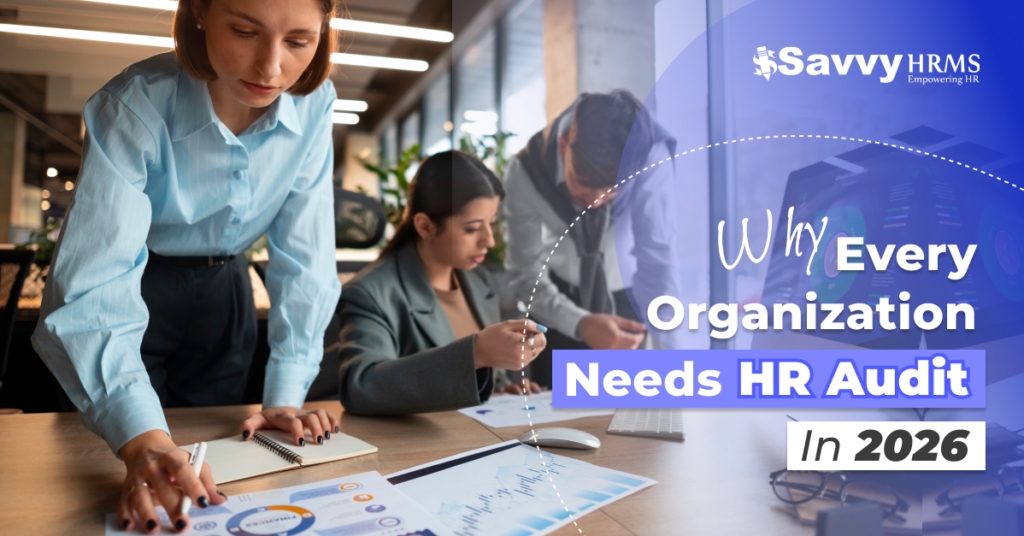
Is your HR department truly compliant? Are your employee records correct and precise? Are your HR policies aligned with today’s fastly changing labor laws, or are you running blind?
Most organizations believe their HR processes are operating correctly without any issue, until a legal dispute, audit, or employee grievance reveals complex gaps in compliance, documentation, or policy enforcement that could have been avoided.
In 2026, the HR landscape is more complicated than ever. Remote work policies, AI-driven hiring tools, developing labor regulations, and employee expectations have reshaped what good HR actually looks like in practice.
An HR audit gives organizations a clear, unbiased view of where they stand, identifying risks, inefficiencies, and opportunities to build a stronger, more compliant, and employee-first organization.
What Is an HR Audit and Why Does It Matter in 2026?
An HR audit is a structured, complete review of an organization’s HR policies, processes, documentation, and compliance practices. It evaluates whether HR operations are aligned with current legal standards and organizational goals.
In 2026, HR audits matter more than ever because organizations face a rapidly developing regulatory environment, various workforce expectations, and the growing use of technology in HR operations, all demanding regular checks for accuracy and legal alignment.
HR Audits matters for every organization because:
• Identifies compliance gaps before they become legal risks
• Evaluates effectiveness of HR policies and procedures
• Enhances employee experience and retention
• Strengthens payroll and benefits management
• Aligns HR strategy with organizational growth goals
• Supports data-driven decision-making across various HR modules
Why Do Organizations Need an HR Audit?
1. Staying Legally Compliant
Labour laws change frequently. HR audits help organizations stay updated, avoiding penalties, legal laws, and regulatory violations that can damage reputation and finances.
2. Identifying Process Inefficiencies
Outdated or manual HR processes slow down operations. An audit pinpoints inefficiencies in recruitment, onboarding, payroll, and performance management workflows that need modernization.
3. Reducing Organizational Risk
HR audits show hidden risks such as misclassified employees, incomplete documentation, and policy gaps, protecting organizations from costly issues and compliance failures.
4. Improving Employee Engagement
Auditing HR practices reveals whether policies genuinely support employee well-being. Fixing gaps results in better engagement, reduced turnover, and a more motivated workforce overall.
5. Aligning HR with Business Strategy
An HR audit ensures that human capital strategies, employee planning, and talent management efforts are fully aligned with the organization’s current and future business objectives.
What Are the Benefits of an HR Audit?
1. Improved Legal Compliance
Regular HR audits keep your organization aligned with developing labour laws, data privacy regulations, and employment standards, reducing legal risk and potential penalties.
2. Cost Savings Through Efficiency
Identifying unecessary processes, payroll errors, and benefits mismanagement helps organizations cut unnecessary costs and redirect resources more effectively across various departments.
3. Stronger Employee Relations
Audits highlight issues in HR communication, grievance handling, and employee support systems, allowing organizations to boost a more transparent and trusting workplace culture.
4. Better Talent Acquisition and Retention
By reviewing recruitment and onboarding practices, HR audits help create more effective hiring strategies that attract top talent and reduce early-stage employee attrition.
5. Accurate HR Data and Reporting
Audits verify the accuracy of employee records, payroll data, and performance metrics, ensuring that business decisions are based on reliable, up-to-date HR information.
6. Stronger Organizational Culture
Reviewing diversity, equity, and inclusion policies through an HR audit helps build a healthier culture where every employee feels valued, heard, and fairly treated.
7. Improved HR Technology Utilization
Audits assess how well HRMS modules, including attendance, leave, payroll, and performance, are being used, helping organizations maximize their software investments.
How HR Audits Help Modern Organizations?
Modern organizations operate in active, competitive environments where people, processes, and technology must work together. An HR audit acts as a strategic health check that ensures all three elements are functioning at their best.
1. Simplifies HR Workflows
Audits identify issues across various HR processes, enabling teams to automate and simplify tasks in recruitment, onboarding, and employee lifecycle management.
2. Supports Digital Transformation
Idetifying existing HR technology adoption helps organizations transition to smarter, fully integrated HRMS platforms that support remote and hybrid employee management.
3. Improves Compensation and Benefits
HR audits review payroll structures, incentive programs, and benefits offerings, ensuring they remain competitive, equitable, and compliant with current market standards.
4. Strengthens Learning and Development
By assessing training programs and skill gaps, audits guide organizations in creating targeted learning initiatives that upskill employees and drive long-term organizational growth.
5. Improves Attendance and Leave Management
Auditing attendance and leave records ensures accuracy, prevents policy misuse, and helps HR teams manage workforce availability more efficiently through integrated HRMS tools.
6. Enhances Performance Management
Reviewing appraisal frameworks during an audit ensures performance evaluations are fair, consistent, and linked to clear organizational KPIs and employee development goals.
How Does an HR Audit Help Ensure Legal and Regulatory Compliance?
Are your employment contracts, offer letters, and HR documentation legally sound and up to date?
One of the most important functions of an HR audit is ensuring legal compliance across all employment practices. It reviews contracts, workplace policies, anti-discrimination practices, and documentation to confirm they meet current national and local labor law requirements, well before any issue arises.
Is your organization at risk of unintentional labor law violations that you may not even be aware of?
Many organizations mistake operate with outdated HR policies, misclassified employees, or inadequate grievance redressal methods. An HR compliance audit proactively identifies these vulnerabilities, enabling timely corrective action that protects both employees and the organization from legal consequences.
Beyond employment law, HR audits also cover data privacy compliance, ensuring employee data is stored, processed, and protected in line with regulations such as DPDP and GDPR. In this modern era, where data security is important, this aspect of an HR audit has become a non-negotiable organizational priority.
What Are the Key Steps Involved in Conducting an HR Audit?
Step 1: Define the Audit Scope and Objectives
Clearly highlight which HR functions, payroll, compliance, recruitment, or performance, will be audited, and set measurable goals for what the audit must achieve.
Step 2: Collect and Review HR Documentation
Collect employee records, contracts, policy manuals, payroll reports, and benefits data to assess their completeness, accuracy, and alignment with legal requirements.
Step 3: Assess HR Policies and Procedures
Evaluate existing HR policies, including leave, attendance, grievance, and code of conduct, to identify outdated, unclear, or non-compliant practices needing immediate revision.
Step 4: Conduct Employee Interviews and Surveys
Coolect direct employee feedback on HR processes, workplace culture, and satisfaction levels to gain ground-level insights that internal data alone cannot reveal.
Step 5: Benchmark Against Industry Standards
Compare your HR practices, compensation structures, and compliance levels with current industry benchmarks to identify competitive gaps and improvement opportunities.
Step 6: Identify Risks and Compliance Gaps
Document all areas of non-compliance, legal risk, and process inefficiency discovered during the audit, prioritizing them by seriousness and potential organizational impact.
Step 7: Develop and Implement an Action Plan
Create a clear, time-bound corrective action plan, assign ownership to HR contributors, and use an HRMS to track implementation, progress, and compliance improvements.
Conclusion
An HR audit is no longer optional, it’s a strategic necessity for every organization in 2026. It protects your business, empowers your employees, and positions your HR task as a true driver of organizational growth.
Savvy HRMS makes conducting and managing HR audits effortless. With powerful modules for payroll, compliance, attendance, performance, and employee management, everything you need is in one place.
Start your HR Audit in 2026 with Savvy HRMS today.
See how Savvy HRMS helps modern organizations to simplify HR audits, ensure compliance, and built employee first oragnizations all from a single and intelligent platform.
Book a Demo Today!
Trusted by various HR teams across India.