Managing employee leave is an essential part of every organization. Among the different types of leave, casual leave is one of the most commonly used and frequently asked about by employees and HR professionals. Whether it is a personal errand, family matter, or an unexpected situation, casual leave allows employees to take short time off without much formal procedure.
In this guide by Savvy HRMS, you will learn everything about casual leave including its meaning, full form, rules, application format, examples, eligibility, and how companies manage casual leave efficiently.
CL Full Form: What Does CL Stand For?
CL stands for “Casual Leave“
This is the most common usage in HR and payroll management. In some contexts, you might see variations like:
- CL = Casual Leave (most common)
- PL = Privilege Leave (earned leave)
- EL = Earned Leave (accrued over time)
- SL = Sick Leave (medical reasons)
Understanding the full form of CL helps you navigate leave policies, track your benefits, and communicate clearly with HR departments.
What Is Casual Leave?
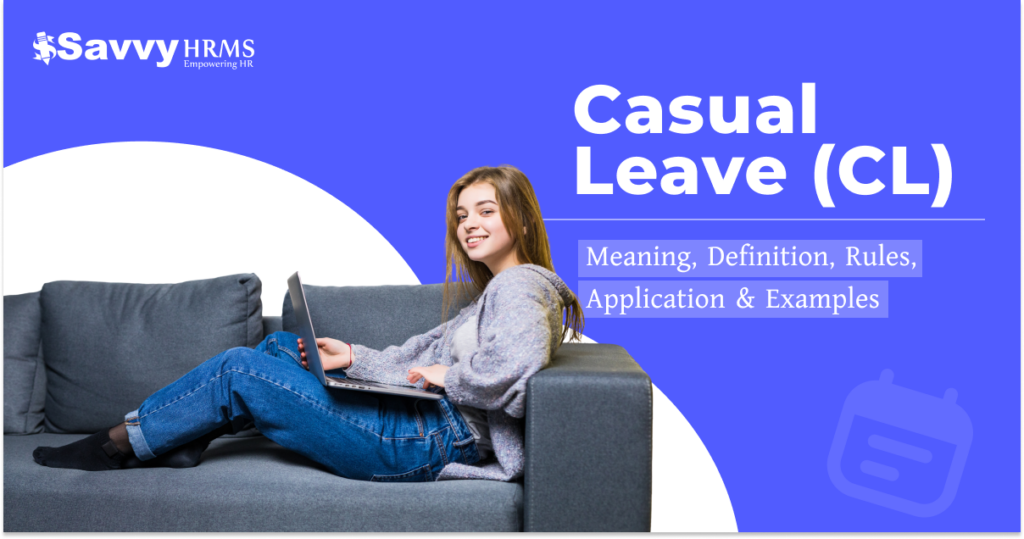
Casual leave or CL is a type of paid leave given by employers to employees for short term personal needs or sudden situations. It is usually taken when something unexpected comes up and the employee needs time off for a day or two.
Casual leave is not meant for planned holidays or long breaks. It is used for personal work, family matters, medical appointments, or any urgent situation that cannot be avoided.
This type of leave allows employees to handle personal responsibilities without worrying about salary cuts or job safety. It helps maintain a healthy balance between work and personal life.
Why Does Casual Leave Matter?
Casual leave serves as more than just an administrative policy; it’s about recognizing employees as humans with lives beyond work. Here’s why it matters:
1. Helps Maintain Work-Life Balance
Casual leave allows employees to handle personal or urgent matters without stress. When employees get short breaks for personal needs, they feel relaxed and work more efficiently. This helps prevent burnout.
2. Reduces Unplanned Absences
When employees have a proper option to take leave for unexpected situations, they are less likely to take unapproved or sudden absences. A flexible casual leave policy shows that the company cares about employee wellbeing.
3. Supports Mental Health
Taking short time off helps employees manage stress, attend health checkups, or take care of family responsibilities. This improves mental wellbeing and increases employee engagement and retention.
4. Makes Leave Management Easy for HR
Clear casual leave rules help employees understand their leave benefits and avoid confusion. HR teams can manage leave requests smoothly, especially when using modern HRMS software.
Casual Leave Rules in India: What You Need to Know
Here’s a quick overview of standard casual leave rules:
| Aspect | Details |
| Annual Entitlement | Typically 6-12 days per year (varies by state and company) |
| Duration Per Use | Minimum 0.5 days; Maximum 3 consecutive days |
| Eligibility | After probation period (usually 6 months) |
| Paid or Unpaid | Paid leave (salary continues) |
| Advance Notice | 1-3 days preferred; emergencies exempt |
| Carry Forward | Generally NOT carried to next year (“use it or lose it”) |
| Encashment | Rarely allowed; depends on company policy |
| Combinations | Cannot combine with earned/sick leave in most organizations |
| Probation Period | Typically unavailable during first 3-6 months |
Statutory Requirements Under Indian Labor Law
The Shops and Establishments Act mandates that companies registered under this act provide employees with a minimum of 6-12 days of casual leave annually, depending on the state. However, the specifics vary:
- Central Government Employees: 8 days/year under the Central Civil Services (Leave) Rules, 1972
- Maharashtra: Minimum 8 days/year
- Delhi: Combined sick + casual leave = 12 days/year
- Private Sector: Typically 6-10 days/year
How Many Casual Leaves Per Year? State-by-State Breakdown
The number of casual leaves isn’t fixed across India. Here’s what you can expect:
| Category | Annual Casual Leave Entitlement |
| Government Sector | 8-12 days/year |
| Private Sector (General) | 6-10 days/year |
| IT/Tech Companies | Often converted to “flexi leave” or wellness days |
| Delhi | 12 days (combined sick + casual) |
| Maharashtra | 8 days (minimum) |
| Gujarat & Haryana | 7 days/year |
| Public Sector Units (PSUs) | 8-12 days/year |
Always check your employment agreement or HR policy handbook. Your company may offer more than the statutory minimum.
Common Reasons for Casual Leave With Easy Real Life Examples
Casual leave is mainly taken when an employee needs time off for personal reasons that arise suddenly or cannot be planned in advance. These situations are genuine, short term, and part of everyday life. Below are the most common real world reasons why employees apply for casual leave.
1. Medical and Health-Related Reasons
Casual leave is often used for minor health needs that do not require long medical leave.
Employees may take casual leave for:
- Visiting a doctor for regular health checkups
- Dental treatment or eye checkups
- Minor illness such as fever, cold, or headache
- Blood tests or preventive health screening
- Accompanying a family member to a medical appointment
These situations usually need only a day or a few hours off, making casual leave the right choice.
2. Personal Errands and Administrative Work
Many important personal tasks can only be completed during working hours. Casual leave helps employees manage these responsibilities without stress.
Common examples include:
- Visiting a bank for account related work or loan processing
- Updating personal documents such as Aadhaar, PAN, or voter ID
- Passport application, renewal, or police verification
- Attending legal or documentation related appointments
- Visiting government offices for official work
These tasks are necessary and time sensitive, which is why casual leave is commonly approved.
3. Family Emergencies and Personal Responsibilities
Family-related situations can arise suddenly and require immediate attention.
Employees may take casual leave for:
- Sudden illness or health emergency of a family member
- Taking care of elderly parents or dependents
- Attending urgent school meetings for children
- Handling unexpected family responsibilities at home
Casual leave allows employees to support their family without worrying about work penalties.
4. Family Functions and Social Commitments
Important family events are a key part of personal life and cultural responsibilities.
Casual leave is often used for:
- Attending weddings, engagements, or close family ceremonies
- Participating in festivals or religious rituals
- Celebrating anniversaries or milestone family events
- Birth celebrations or family gatherings
These occasions usually require a short break, making casual leave suitable.
5. Unexpected Home Related Situations
Sometimes personal emergencies happen at home that need immediate attention.
Examples include:
- Emergency plumbing, electrical, or water related repairs
- House shifting or relocation related work
- Power, water, or gas related emergencies
- Issues caused by absence of domestic help or caretakers
In such cases, casual leave helps employees handle the situation quickly and return to work smoothly.
6. Education and Professional Development Needs
Casual leave also supports personal growth and learning activities.
Employees may apply for casual leave to:
- Appear for examinations or certification tests
- Attend interviews for higher education or professional courses
- Participate in workshops, seminars, or training sessions
- Appear for online exams that require supervision
These activities contribute to skill development and career growth.
7. Travel and Daily Commute Problems
Travel-related issues can sometimes make it impossible to reach the workplace on time.
Casual leave may be taken due to:
- Sudden travel emergencies or unplanned journeys
- Major transport disruptions such as strikes or route closures
- Vehicle breakdowns or minor road accidents
- Extreme weather conditions affecting travel
In such cases, casual leave ensures safety while maintaining workplace discipline.
How to Apply for Casual Leave: Step-by-Step Process
Applying for casual leave is straightforward. Here’s the proper way:
Step 1: Check Your Balance & Company Policy
Before applying, verify your remaining casual leave days and understand your company’s specific requirements. Modern HRMS platforms (like Savvy HRMS) show your leave balance in real-time.
Step 2: Plan Your Request (When Possible)
Provide advance notice, preferably 1-3 days before your intended leave. For emergencies, immediate notification is acceptable.
Step 3: Submit Your Application
Write a professional leave application including:
- Clear subject line: “Casual Leave Request [Dates]”
- Duration: Specify exact dates and whether it’s full-day or half-day
- Brief reason: Keep it professional and concise
- Impact plan: Mention how you’ll handle pending work
Step 4: Awaiting Approval
Most casual leave requests are approved quickly, especially if your balance is available. Your manager has discretion based on operational needs.
Step 5: Once Approved
Complete handover of critical tasks, set up out-of-office messages, and ensure team continuity.
Sample Casual Leave Application
Subject: Casual Leave Request – [Dates]
Dear [Manager’s Name],
I am writing to request casual leave for [mention dates: e.g., December 20-21, 2025] due to [mention brief reason: e.g., family medical appointment].
I have [X days/half days] remaining in my casual leave balance. I have ensured that all pending work is completed/will be handed over to [colleague name] before my departure. I will be available via email for any urgent matters.
I appreciate your approval and understanding.
Best regards,
[Your Name]
Casual Leave vs. Earned Leave: Key Differences
Understanding the distinction helps you use the right leave type:
| Aspect | Casual Leave (CL) | Earned Leave (EL) |
| Purpose | Unforeseen emergencies | Planned vacations/rest |
| Duration | 1-3 days at a time | Can be longer (15-30 days/year) |
| Accrual | Granted annually | Earned based on days worked |
| Advance Notice | Not required (emergencies) | Requires planning |
| Carry Forward | Cannot carry to next year | Can accumulate |
| Encashment | Not allowed | Can be encashed |
| Flexibility | High (last-minute options) | Lower (planned requirement) |
| Documentation | Usually not required | May require itinerary/plans |
| Annual Days | 6-12 days | 12-30 days |
Important Restrictions & Best Practices
What You Cannot Do with Casual Leave:
- Cannot combine with earned or sick leave
- Cannot carry forward unused days
- Cannot extend beyond 3 days without manager approval
- Cannot encash unused casual leave for money
- Cannot apply during critical business periods without proper justification
- Cannot use repeatedly without valid reasons
Best Practices:
- Space out your casual leave throughout the year rather than using all days at once
- Avoid using CL during critical projects unless absolutely necessary
- Keep advance notice whenever possible
- Maintain documentation for medical or emergency reasons
- Don’t abuse the policy frequent unjustified casual leave affects performance reviews
Conclusion
Casual leave represents an organization’s commitment to employee well-being. It provides the flexibility to handle life’s unexpected moments from medical appointments to family emergencies, without compromising income or job security.
Key Takeaways:
- CL is paid leave for unforeseen personal matters (typically 1-3 days)
- Annual entitlement ranges from 6-12 days depending on your state and employer
- Unused casual leave usually lapses at year-end
- It differs fundamentally from earned leave in purpose, duration, and encashment rules
- Proper leave management via HRMS software prevents errors and ensures compliance
Whether you’re an employee planning your leave or an HR manager implementing policies, understanding casual leave rules ensures smooth operations and higher employee satisfaction.
Ready to simplify your leave management? Savvy HRMS provides an intelligent, automated solution for tracking casual leave, approvals, and payroll integration all in one platform. Explore how Savvy HRMS can simplify your HR operations today.