

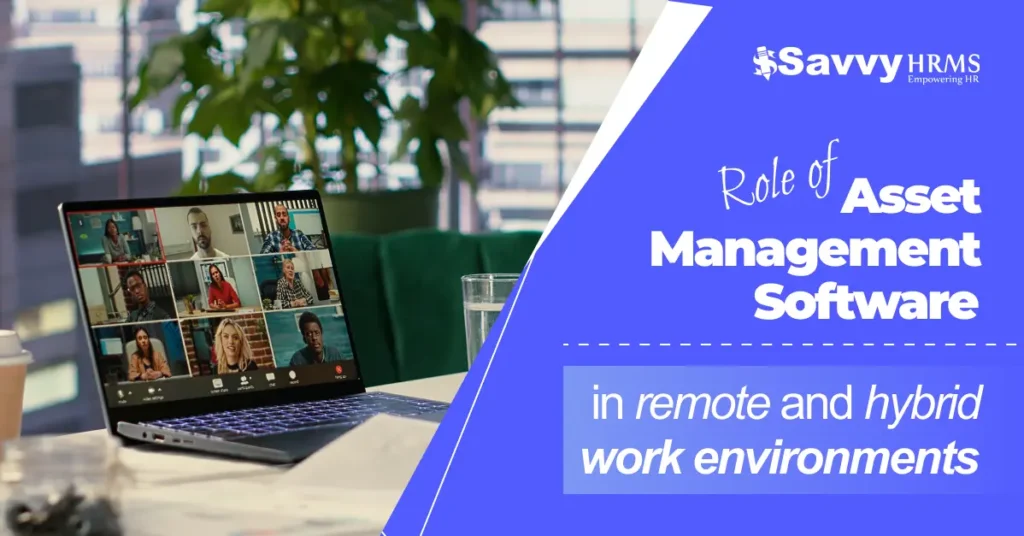

The world of work has changed forever with remote working and hybrid working environments. Employees are now located in many different areas using many types of devices, so companies struggle more than ever with managing their assets efficiently across many geographical areas and time zones.
Due to the many locations in which an employee can now be (home, office, etc.), assets such as laptops, mobile phones, software licenses, security tools, and access rights may be scattered all over the place without an accurate method of tracking them. Companies now face the risks of losing assets, having compliance problems, spending too much money on assets, or having employees work less productively due to being unable to find the necessary assets they need to perform their job duties.
Therefore, by integrating an asset management software solution with the many other HR applications (such as HRMS, payroll, attendance management, leave management, and performance management), companies can help ensure they have better access and visibility into their assets and, thus, have increased control over the operation of their distributed workforce.
What Is Asset Management Software and Why Does It Matter in Distributed Workforces?
An asset management software is an all-in-one digital system for tracking, viewing, and managing your company’s assets from the minute they are acquired to the moment they are thrown away.
These software applications can also provide your organization with a level of accountability and visibility over its assets in a remote and hybrid work environment, and help avoid duplication or loss of assets through multiple locations.
What are the Benefits of Asset Management Software?
- Real-time visibility of assets assigned to employees in remote or hybrid working scenarios.
- Help to reduce losses, misuse, and duplicate assets across locations.
- Increased security of company data and compliance with applicable regulations.
- A smooth onboarding and offboarding process.
- Integrations with HRMS, payroll, and attendance programs.
For distributed employees, asset management will create the visibility needed to connect employees with IT and HR. It will also ensure that the asset is securely tracked and optimized wherever it may be located.
Role of Asset Management Software in Remote and Hybrid Work
In remote and hybrid environments, asset management software acts as a backbone for operational efficiency, security, and workforce enablement.
Key Roles of Asset Management Software
1. Asset Visibility
Centralized dashboards provide organizations with real-time visibility of their assets’ positions, ownership status, and location, including at all of their locations and remotely around the globe.
With this information, HR, IT, and management have an accurate view of their assets, allowing them to make informed decisions to reduce asset loss and ensure accountability throughout the organization.
2. Remote Asset Allocation
Using asset management systems allows organizations to quickly assign laptops, tools, and software to their employees, regardless of their location or work arrangement needs.
This eliminates delays in onboarding or role changes, project changes, and enables remote and hybrid teams to continue working without interruption.
3. Secure Device Monitoring
Continuous device monitoring provides organizations with information related to usage, access rights, and configurations so they can identify risks and vulnerabilities at an early stage across the distributed work environments within which they operate.
This proactive approach improves data security, protects sensitive data, and supports compliance in remote work environments for modern organizations virtually anywhere.
4. Lifecycle Management
The tracking of an asset from its purchase to its installation to its maintenance to its upgrades is known as lifecycle management. Tracking an asset’s entire life cycle allows the company to use the asset to its full extent.
Lifecycle management allows for proper planning for the replacement of an asset, controlling asset costs, and avoiding downtime due to having outdated or not well-maintained assets in remote locations.
5. Compliance & Audit Readiness
The ability to track and have accurate asset records will enable a company to meet laws and regulations (compliance); establish and implement internal polices; and comply with audit requirements across multiple locations without the need for employees to physically validate and confirm assets to ensure accuracy.
6. Software License Management
The management of software licenses provides the ability to monitor software licenses within a location. Managing software licenses allows a company to avoid being in violation of laws and regulations by properly monitoring the use of software and not spending any more money than necessary.
Software license management will help a company pay for only the licenses that are needed while at the same time maximizing the value of their software investment made in the new dynamic workplace.
7. Off-Boarding and Asset Recovery
Structured workflows for off-boarding and asset recovery will ensure that company assets are returned, deactivated (or assigned to someone new) upon the exit of a remote employee, securely and on time.
This will decrease data security issues while minimizing any potential financial loss and ensuring compliance during employee transitions in hybrid and remote organizations of all sizes.
8. Integration with HR Systems
Asset management software interfaces effortlessly with human resource management systems (HRMS), payroll systems, time and attendance management systems, and performance management systems across the entire workforce.
Integration of these systems provides synchronized employee data; therefore, creating an overall smoother workflow, improved coordination of the HR, IT, and Financial Teams, as well as efficient organization.
Key Features Supporting Remote and Hybrid Teams
1. Accessibility From the Cloud
HR and IT departments can operate assets remotely and without interruption from anywhere and at any time when utilizing the cloud deployment model.
2. Real-Time Asset Tracking
By utilizing real-time asset location, status, and ownership activity in a remote and hybrid work environment.
3. Automated Asset Assignment
Automating the assignment of assets at the time of onboarding to existing employee records will be compatible with HR software to allow asset assignments.
4. Access Control and Security
Role-based access control, encryption, and compliance standards will be used to ensure that all sensitive organizational data is kept secure.
5. Eco-System Integration with HRMS
HRMS, payroll software, leave management systems, and attendance management systems can be integrated into the asset management system to provide smooth access for all employees.
6. Reporting and Analytics
Reporting and Analysis of the usage, cost, and performance of all organizational assets will be provided to assist with strategic organizational decision-making.
Benefits of Asset Management Software for Every Organization
1. Better Consolidated Asset Management
Enhanced asset tracking brings together departments, locations, and remote teams to ensure consistency and redress any inconsistencies caused by a lack of asset visibility; thereby enhancing organization-wide efficiency.
2. Cost Savings Due to Asset Optimization
Preventing over-purchasing or having excess and unused assets that would have otherwise constituted a cost; maximizing the organization’s return on investment by utilizing only what is needed, and avoiding the unnecessary purchase of assets that would result in purchasing duplicates.
3. Improved Security of Data
Providing an audit trail through monitoring access to devices, managing who has permission and access to what data, ensuring compliance with applicable laws and regulations, thus protecting sensitive data, thereby reducing the potential for data breaches and improving the security posture of all organizations.
4. Increased Operational Efficiency
Automating the processes associated with managing assets eliminates manual effort for HR and IT teams in managing response time to support improvements in employee productivity and the ability to get their work done.
5. Improved Employee Experience
The effective provision of assets in a timely manner enables employees to continue to be productive by eliminating the delay they experience when seeking assistance to obtain an asset.
6. Assistance with Compliance and Auditing
Maintaining accurate records of asset inventory assists with compliant audits, compliance with all applicable laws and regulations, as well as compliance with company policies, while reducing administrative costs and associated risks.
7. Workforce Planning
Integrating with Human Resource Management Systems and performance management systems to ensure the proper use of assets is in alignment with an employee’s expectations and on an ongoing basis, as it relates to improving productivity, efficiency, and supporting future workforce planning strategies through the attainment of scalable growth.
Best Practices for Implementing Asset Management Software
1. Implement Cloud Solutions
Use cloud-based asset tracking and management applications that offer remote access as well as scalability, real-time updates, and the ability to integrate with existing HR management systems (HRIS) for a distributed workforce.
2. Set Clear Policies
Create a set of clear asset-related usage, safekeeping, security, and recovery policies that define employee duties and accountabilities, and provide these policies throughout the organization in order to ensure that all employees understand their respective accountabilities for the usage of assets when working either remotely or in a hybrid model.
3. Connect to HRMS
Connect asset-management applications with existing human resource management systems (HRMS) and payroll and attendance tracking systems so as to provide a single data flow, accurate records, and efficient operations for the workforce.
4. Provide Training
Provide training to all employees and all administrators on their responsibilities for the assets; how to comply with the security protocols associated with assets; and how to use asset tracking and management systems, in order to reduce errors, improve compliance, and ensure effective utilization of the system.
5. Conduct Regular Audits
Conduct periodic asset audits to ensure compliance with usage policies, assess performance (i.e., how many of each type of asset is being used), and verify data integrity (i.e., accuracy of information) across distributed teams so as to minimize risk and maintain operational control continuously.
Challenges of Managing Assets in Remote and Hybrid Work Environments
| Challenge | How Asset Management Software Solves It |
| Lack of asset visibility | Centralized dashboards provide real-time visibility of assets across remote and hybrid locations. |
| Asset loss and theft | Automated tracking and ownership records reduce asset misplacement and unauthorized usage. |
| Data security risks | Security controls, access management, and compliance monitoring protect sensitive data. |
| Inefficient onboarding | Automated asset allocation integrates with HRMS to ensure timely provisioning. |
| Complex offboarding | Structured asset recovery workflows reduce risks during employee exits. |
| Software license misuse | License tracking prevents overuse, underuse, and compliance violations. |
| Manual record keeping | Automation eliminates spreadsheets, reducing errors and administrative workload. |
Conclusion
With remote and hybrid work settings becoming standard today-many companies can no longer use manual or stand-alone systems for asset management efficiently; however, when asset management software integrates with human resource systems (e.g., HR software, payroll systems, etc.), the combined application will provide companies with the necessary tools to ensure they have continued visibility, security, and operational efficiencies throughout all their locations and teams.
Savvy HRMS represents a complete change to traditional human resource management applications by providing businesses with integrated solutions for managing both their workforce and their assets, thus providing businesses with simplified operations while also enhancing compliance and the overall employee experience.
Want to see how Savvy HRMS can simplify asset management for your remote and hybrid teams?
Book a free demo today and experience smarter HR and asset management in action.