

HR Compliance: A Complete Guide for Every Organization


-
AuthorRuchika Rajput
-
 Last Updated
January 15, 2026
Last Updated
January 15, 2026
-
 Reading Time
13 Mins
Reading Time
13 Mins
Are you sure that your organization is fully compliant with the ever-changing HR laws, or are there hidden risks being quietly created?
HR compliance is no longer simply a legal requirement or a checkbox; it is now a strategic requirement for all businesses. As businesses increase in size and diversify, and as regulations increase, the consequences of non-compliance for an organization are significant: economic penalties, negative publicity, and increased distrust among employees.
In the modern business environment, HR departments must deal with the dual role of managing people as well as adhering to strict legal requirements. All aspects of HR, hiring, payroll, managing leave, workplace health and safety, are together with compliance requirements; thus, the potential for liability or exposure to lawsuits or government investigation exists if an organization fails to comply.
Therefore, this guide explains HR compliance, provides insights into the importance of HR compliance, and provides organizations with ways to improve compliance. using the appropriate policies, processes, and HR software, to enable them to remain compliant and prepared for the future. This guide is complete if you are a business leader or an HR professional.
What Is HR Compliance?
HR Compliance is the laws governing employment, labor relations, and workplace practices is the responsibility of an organization’s Human Resources department. HR compliance surrounds every aspect of an organization’s practices that relate to the hiring and termination of employees, payroll processing and benefit administration, job descriptions, performance appraisals, promotions, employee discipline, and workplace rules and regulations.
To put it more simply, HR compliance means adhering to the employment laws of the federal, state, and local jurisdictions, as well as the implementation of equitable and consistent human resource management policies. When HR departments adhere to compliance, they improve the rights of their employees by protecting them from unlawful actions by employers; reduce the potential for legal liabilities; and provide accountability and openness for people management across the organization.
Why HR Compliance Is Important?
The following are some of the primary benefits of HR compliance for organizations:
1. Minimizing Risks
By complying with state and federal laws related to employment, including wages and safety, discrimination, employee rights, and many other areas, the risk of lawsuits or fines is reduced.
2. Employee Assurance & Equity
HR compliance will create an environment of assurance and equity with respect to HR policies and procedures. As a result, employees will have greater confidence in the organization’s policies and in the leadership’s decisions.
3. Brand Protection
When an organization is compliant with employment law, the organization is better able to protect its brand from being damaged by public legal issues or non-compliance.
4. Providing Safe Places to Work
Upon compliance with employment laws pertaining to workplace safety, the organization has more control over the issues associated with their business operations as well as more control over the safety of their employee’s work environments.
5. Operational Consistency
The standardization of compliant HR processes provides for a common understanding of HR-related procedures that can be applied uniformly throughout the organization, creating simplified decision-making processes.
6. Financial Security
By managing payroll, filing taxes, and managing benefits effectively, organizations can avoid expensive mistakes and government penalties.
7. Support for Growth
Organizations can utilize compliant HR systems to conduct business in new areas while meeting new regulatory standards.
8. Audit and Inspection Readiness
Compliance ensures that all documentation maintained by the organization is complete and readily available in the event of either an internal audit or a government inspection.
What are the types of HR Compliance?
HR compliance covers various legal, ethical, and operational areas and is comprised of various dimensions that need to be understood in order for organizations to take a systematic approach to risk management and ensure that they are managing their employee-related processes appropriately according to the applicable laws and their business objectives.
1. Statutory (Legal) HR Compliance
Statutory HR Compliance relates to compliance with all applicable labour and employment laws at the Federal, State, and Local levels. Statutory compliance covers the payment of wages, limits on the number of hours worked, payment of leave entitlements, rules relating to termination of employees, and employee rights in the workplace. Failure to comply with statutory HR Compliance may result in fines, a lawsuit, or other penalties.
2. Regulatory Compliance
Regulatory Compliance consists of compliance with the laws and regulations published by Governmental Agencies and Regulatory Bodies. Regulatory compliance may include compliance with Workplace Health & Safety, Occupational Health & Safety, and Social Insurance Program Compliance, to name a few.
3. Payroll & Tax Compliance
Payroll Compliance ensures that organizations calculate employee salaries correctly, deduct any Statutory Deductions such as Taxes, and submit W-2 and W-9 Forms on time. Organizations use payroll software to assist them with ensuring they will be in Compliance with Payroll from an accuracy standpoint without any errors.
4. Workplace Health & Safety Compliance
Workplace health & safety compliance involves ensuring that there are safe working conditions and that workplaces do not create any potential dangers to the employees working in them; workplace health & safety compliance also includes training employees on workplace safety protocols and emergency procedures.
5. EEO Compliance
Equal Employment Opportunity (EEO) compliance ensures that people are treated fairly when they are hired, promoted, compensated, and terminated; it prevents discrimination against people based on their gender, age, disability, race, religion, etc.
6. Data Protection & Privacy Compliance
Human Resources Departments maintain sensitive employee information; therefore, this type of compliance governs how data is collected, stored, accessed, and kept confidential, and may vary according to local data protection laws or internal policies.
7. Benefits and Leave Compliance
Benefits and leave compliance covers all statutory leave, such as maternity and paternity leave, sick leave, and health care, as well as the manner in which employers keep track of who is eligible for what kinds of benefits, utilizing leave management software.
8. Attendance and Working Hours Compliance
Employers must follow laws regarding hours worked, overtime pay, breaks, and tracking time. Attendance management software allows for accurate record-keeping and compliance reporting.
9. Contractual and Policy Compliance
HR policy compliance ensures that employees are treated according to the terms of their employment contracts and collective bargaining agreements, and is important to lowering errors and improving employee relations.
10. Ethical & Corporate Governance Compliance
HR policies promote ethical behavior, transparency, and responsibility concerning managerial relationships with their employees, and while they are not legally mandated, they are the basis of long-term organizational viability.
What Is HR’s Role in Compliance?
HR creates, implements, and supports HR activities that conform to appropriate laws, rules, and regulations (like “compliance”). In this manner, the HR professional’s role is to interpret and translate applicable labor and employment laws into the policies and procedures for the workplace (like the workplace policies and procedures).
But HR’s role extends beyond policy development; HR is the compliance for the organization. As such, HR educates employees about compliance issues and how compliance impacts the organization through employee training, manager training, compliance audits, and using payroll software and HRMS to identify areas of manual error and non-compliance.
Key HR responsibilities in compliance include:
- Creation and Maintenance of compliant HR policies.
- Monitoring labor and employment law changes.
- Payroll, attendance, and leave are accurate.
- Maintaining all employee records and documentation.
- Providing compliance training and awareness courses to employees.
- Coordinating HR with legal and regulatory authorities.
HR Compliance: Laws and Regulations Employers Should Know
HR Compliance Laws are the foundation of ethical and legal people management. Employers must understand and follow many of the HR Compliance Laws regulating how to hire, pay, provide safe workplaces, give employee benefits, protect employees’ data, and maintain employee rights. Not complying with HR Compliance Laws can lead to significant legal and financial consequences.
Core HR Compliance Areas:
1. Non-discriminatory job advertisements and hiring practices
Job advertisements and hiring practices should not include bias based on gender, age, disability, race, religion, or nationality.
2. Awareness of anti-discrimination laws
Employers should have policies, training, and grievance mechanisms in place to protect employees from discrimination and harassment.
3. Form I-9 Compliance
Employers must confirm the identity and authorization to work of each employee to ensure that they can legally employ them.
4. Conducting Background Checks
Background checks must be conducted in a manner that is legal, relevant to the job for which the candidate is being hired, and in a way that respects the privacy of the applicant and the candidate’s consent to the background check.
5. The classification of workers
By classifying workers correctly, employers can ensure that non-exempt employees are eligible for overtime and that there is compliance with wage law requirements.
6. Deductions
Payroll deductions must be legal, kept on file, and suitably communicated to employees.
7. Paying employees and withholding Taxes
The calculations of salaries and tax withholding must be accurate, and payments must be made on a timely basis to be in compliance.
8. Health Care Coverage
Respectively listening to the employee to ensure that eligible employees have access to the health care and health-related benefits required by law.
9. Federal or State Labor Law Notices
All employers must post all federally mandated and state-mandated labor law notices for employees.
10. Workers’ Compensation Insurance
Employers are required to provide workers’ compensation coverage for injured or ill employees who suffer work-related injuries.
Key Employment Laws Impacting HR Compliance
1. Fair Labor Standards Act (FLSA)
The Fair Labor Standards Act establishes minimum wage (pay), overtime eligibility, child labor laws, and record-keeping requirements to provide a fair compensation system and standardized working hours.
2. Occupational Safety and Health Administration (OSHA)
The Occupational Safety and Health Administration requires employers to create a safe and healthy workplace and decrease issues. Employers are also required to provide workplace safety training and follow established safety standards.
3. Title VII of the Civil Rights Act of 1964
Title VII prohibits discrimination in the workplace based upon race, color, religion, gender, and national origin. It gives equal opportunities to individuals when considering hiring, promoting, and employment decisions.
4. Americans with Disabilities Act (ADA)
The Americans with Disabilities Act requires that employers provide reasonable accommodations to ensure that those who have disabilities can perform the essential functions of their jobs without being discriminated against.
5. Age Discrimination in Employment Act (ADEA)
The Age Discrimination in Employment Act provides protection for employees over the age of 40 from disadvantages in hiring, compensation, promotion, and termination.
6. Equal Reimbursement Act (EPA)
The Equal Reimbursement Act provides for equal pay for men and women who do substantially equal work in an organization, working to eliminate the gender wage gap within an organization.
7. The National Labor Relations Act (NLRA)
The NLRA protects employees’ rights to organize and participate in union activities, negotiate collectively, and take part in joint action for mutual support or protection without fear of retaliation from their employers.
8. The Immigration Reform and Control Act (IRCA)
The IRCA requires employers to verify that employees are authorized to work in the United States before hiring them. Employers are prohibited from knowingly hiring individuals without valid work authorization.
9. The Genetic Information Nondiscrimination Act (GINA)
GINA prohibits employers from using an employee’s general information to make employment decisions and protects employees by maintaining their private genetic information and preventing discrimination.
10. The Pregnant Workers Fairness Act (PWFA)
Under the PWFA, employers are required to provide reasonable accommodations to pregnant workers for pregnancy-related medical conditions to support healthy mothers and successful pregnancies and to enable working women to remain productive members of the workforce.
11. The Uniformed Services Employment and Reemployment Rights Act (USERRA)
USERRA provides job security and protects service members from being discriminated against because they serve in the Armed Forces.
12. The Fair Credit Reporting Act (FCRA)
The FCRA regulates the way employment background screening is conducted federally by requiring that consumer reports be used fairly and transparently. It was passed to protect the rights of consumers and to promote fair and equitable hiring practices for employers.
HR Compliance Issues: Challenges Faced by Businesses and Their Solutions
1. Constantly Changing Regulations
Recommended Solution: Implement regular legal monitoring and HR Compliance Audits with Automated HR Software for fast adaptation to changing regulations and creation and updating of new Compliance policies and Processes.
2. Salary Administration Errors
Recommended Solution: Implement Payroll Software to automate salary calculations, statutory deductions, tax filings, and compliance reporting, with the goal of reducing errors and improving the timeliness and accuracy of payroll processing.
3. Variable Application of Policies
Recommended Solution: Create standardized HR Ppolicies across the organisation and implement structured HR training for all managers across the organisation to ensure equitable and consistent application of Policies.
4. Poor Record Management and Poor Documentation
Recommended Solution: Create and use a Centralised HRMS to back up employee records. This will help to ensure the accuracy of records, audit readiness, and compliance with Regulations.
5. Lack of Awareness of Compliance
Recommended Solution: Provide regular compliance training and internal communications to educate employees and managers on applicable laws, organisation policies and practices, and acceptable ethical workplace practices.
6. Remote Workforce Compliance Risk
Recommended Solution: Use attendance management software and digital compliance tracking tools to track working hours, leave, and compliance of remote and hybrid employees with applicable Regulations.
How to Improve HR Compliance?
1. Use strong HR Software
Modern HR software allows organizations to automate payroll, attendance, and leave, thereby decreasing compliance risks, reducing manual errors, and ensuring employee regulations are followed consistently.
2. Have All Employee Information in One Place
Having one HRMS will enable you to securely store employee records, provide correct information, enable easy audits, and provide ready access to all employment compliance documents.
3. Conduct Regular Compliance Audits
Regular compliance audits will allow identifying any employee policy gaps early on, decreasing an organization’s legal exposure, and keeping an organization ready for government inspections and changes in employment law.
4. Provide Continuous Training to Managers and Employees
Ongoing training will educate both managers and employees on labor law, ethical behavior, and the organization’s HR policies, thereby increasing awareness and understanding of labor laws and enhancing the organization’s ability to remain compliant with these laws.
5. Standardize HR Policies
Standardizing HR policies creates clarity and consistency across departments and locations, which eliminates confusion, reduces errors, and consistently meets compliance requirements.
6. Use Automated Payroll and Benefits Software
Using automated payroll software allows for accurate calculations of wages, statutory deductions, tax documents, and timely payment of both wage and benefit payments.
7. Use Digital Leave and Attendance Tracking
Using digital leave and attendance software increases record accuracy, allows for tracking of hours worked, and assists with compliance with labor law and, in particular, overtime regulations.
8. Engage Compliance-Type HRMS Providers
Compliance-type HRMS providers are designed to simplify compliance management, assist organizations with growth, and provide support for companies aligned with the constantly changing laws regulating employment.
Conclusion
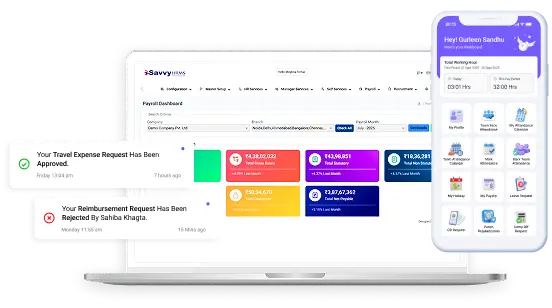
HR compliance is one of the primary elements of ethical, legal, and sustainable people management. Understanding what HR compliance is, staying up-to-date on current regulations, and proactively addressing HR Compliance Challenges enables companies to mitigate risk and increase confidence and faith in their employees. Solutions developed today, such as Savvy HRMS, provide many advantages to an organization by combining Payroll, Attendance, Leave Management, and Compliance Tracking into one location (System). The right investment in the best HRMS will position an organization to fully comply, build operational flexibility, and prepare for future workforce issues.