

Assets Management Software: Complete Guide for 2026


-
AuthorRuchika Rajput
-
 Last Updated
December 26, 2025
Last Updated
December 26, 2025
-
 Reading Time
16 Mins
Reading Time
16 Mins
Organizations across various industries are discovering a crucial truth: asset management is no longer a back-office function; it’s a competitive advantage. Every day, thousands of businesses struggle with separate asset data, missed maintenance deadlines, and unused resources that exhaust profitability.
The challenge is real and urgent: how do you maintain visibility over various assets, from IT equipment and vehicles to inventory and human capital, while together maximizing ROI and reducing operational costs?
The answer lies in transforming your approach from reactive, manual asset tracking to proactive, intelligent asset management. But here’s the important question worth asking: Are you still managing assets manually, risking inefficiency and data loss? Or are you leveraging modern asset management solutions to convert how your organization operates?
This complete guide explores everything you need to know about asset management systems in 2026. From understanding the fundamentals of asset management software to discovering the best asset management software in India, we’ll walk you through the journey of digital asset transformation. Whether you’re a startup looking for your first asset management platform or an enterprise refining your Asset Management Plan, this guide will equip you with actionable insights to drive organizational excellence.
What is Asset Management Software?
Assets management Software refers to the systematic approach to managing an organization’s assets throughout their entire lifecycle, from investment and arrangement to maintenance, improvement, and final disposal. It involves physical assets like machinery and equipment, IT assets such as computers and software, vehicles, real estate, and increasingly, digital and human capital assets. The primary goal is to ensure that every asset delivers maximum value while reducing risks and unnecessary services.
In the context of modern organizations, asset management systems and asset management software have become essential tools for maintaining visibility and control over assets. These systems enable businesses to track asset location, condition, utilization rates, and maintenance history in real time. By implementing a strong asset management system, organizations can identify perfect assets, improve resource allocation, and make data-driven decisions about asset investments. This proactive approach transforms asset management from a reactive, compliance-driven function into a strategic business enabler that directly impacts profitability and operational efficiency.
What is the Purpose of Asset Management Software?
Understanding the important purposes of an asset management system helps organizations align their strategies with business objectives:
1. Maximizing Asset Value and ROI
Effective asset management extends asset lifespan through preventive maintenance, ensuring that every piece of equipment operates at peak efficiency for as long as possible. By reducing unexpected breakdowns and associated downtime, organizations can maintain consistent operational performance and avoid costly emergency repairs.
The systematic approach to asset management also improves asset utilization rates, maintaining capital investments and displaying clear returns on every asset investment. Additionally, organizations can identify unused assets for reallocation, freeing up resources and redirecting them to areas where they generate greater value.
2. Ensuring Operational Efficiency
Asset management systems simplify asset tracking across various locations, providing combined visibility regardless of where assets are established. This removes the time wasted searching for equipment and resources, allowing teams to focus on productive work rather than asset hunts.
By automating maintenance scheduling and compliance tasks, organizations reduce manual errors and ensure nothing falls through the cracks. Additionally, planned maintenance reduces operational disturbances, as preventive measures keep equipment running smoothly without unexpected failures that could stop business operations.
3. Risk Management and Compliance
Maintaining correct asset records is important for audit purposes, creating a dependable foundation for financial reporting and regulatory inspections. Asset management systems ensure regulatory compliance across industries by documenting all asset-related activities and maintaining proper records.
This complete documentation reduces liability risks through proper asset documentation, protecting the organization from legal complications. Furthermore, organizations can protect their assets from misuse by establishing clear ownership records and implementing access controls through systematic asset management protocols.
4. Cost Optimization and Budget Control
Asset management provides visibility into asset-related expenditures, enabling finance teams to understand where money is being spent and identify cost-saving opportunities. Precise reduction tracking for financial reporting ensures that financial statements reflect true asset values and support proper tax deductions.
By minimizing unnecessary purchasing of duplicate assets, organizations avoid wasteful spending on equipment that already exists elsewhere in the company. Moreover, asset management systems support informed capital budgeting decisions by providing data-driven insights into asset performance and future investment needs.
5. Strategic Planning and Decision-Making
Asset management systems generate valuable insights on asset performance records, revealing patterns that inform strategic decisions about asset investments and replacements. These insights support long-term Asset Management Plan development, helping organizations align their asset strategy with larger business objectives.
By facilitating data-driven decisions, organizations can make purchases based on actual need and performance data rather than assumptions. Finally, asset management enables scalability planning based on asset utilization patterns, allowing organizations to anticipate future asset requirements and budget accordingly as the organization grows.
How Does an Asset Management System Work?
A well-designed asset management system operates through interconnected processes that create a smooth information flow:
1. Asset Identification and Classification
The basics of effective asset management start with assigning unique identifiers such as QR codes, barcodes, or RFID tags to each asset, ensuring correct tracking throughout its lifecycle. Assets are systematically categorized by type, location, department, and cost center, creating a complete organizational structure that enables quick identification and recapturing of asset information.
The system establishes asset structures for complex organizational processes and maintains standardized data fields for consistency across the platform. This structured approach eliminates confusion, prevents duplicate records, and ensures that all asset information remains uniform, comparable, and reliable for reporting and analysis purposes.
2. Asset Tracking and Location Management
Real-time tracking technologies provide instant visibility into asset locations and status across the organization. The system generates real-time dashboards showing asset availability and enables quick asset searches, allowing managers to locate equipment in seconds rather than hours and make informed distribution decisions.
Automated alerts for unauthorized asset movements prevent theft and misuse while maintaining clear accountability for valuable resources. This refined loss prevention method protects organizational assets while creating a transparent system where every asset movement is recorded and monitored for security and compliance purposes.
3. Maintenance and Lifecycle Management
Preventive maintenance scheduling based on usage patterns and manufacturer recommendations extends asset lifespan and maximizes operational dependability. The system tracks maintenance history and associated costs, providing visibility into the true cost of ownership and enabling informed decisions about whether maintenance or replacement is more economical.
The system manages equipment warranties and service contracts while documenting asset condition and reduction over time. This complete lifecycle tracking creates correct financial records that support accounting compliance, tax reporting, and strategic asset planning decisions aligned with organizational objectives.
4. Performance Analytics and Reporting
The system generates complete reports on asset utilization and efficiency, revealing performance gaps and improvement opportunities across the organization’s asset portfolio. Visual dashboards convert difficult data into actionable intelligence that leaders and managers can quickly understand and act upon for strategic decision-making.
Detailed insights into maintenance cost trends help organizations understand expense patterns and identify improvement opportunities. The system identifies assets requiring replacement, enabling proactive planning that prevents unexpected equipment failures and supports long-term asset strategy development.
5. Integration with Other Systems
The system connects with financial systems for correct reduction in tracking, ensuring asset values are properly reflected in financial statements and supporting accounting compliance. This integration removes manual data entry errors and maintains consistency between asset records and financial records across the organization.
Integration with HR systems links assets to employees, creating clear accountability for equipment assignments and supporting smooth asset transitions during employee lifecycle events. The system syncs with maintenance management modules and procurement systems, simplifying asset equipping while maintaining compliance with purchasing policies and budget limitations.
Types of Asset Management Systems
1. IT Asset Management Systems
Specifically designed for managing computer hardware, software licenses, and IT infrastructure. These systems track software compliance, prevent unauthorized installations, and manage IT hardware lifecycles efficiently.
2. Physical Asset Management Systems
Handle physical assets like vehicles, machinery, furniture, and equipment. They monitor asset condition, schedule maintenance, and track asset movements across locations.
3. Human Resources Asset Management Systems
Manage employee-related assets and resources, including equipment assignments, training materials, and resource allocation. These systems integrate employee data with asset allocation for optimal employee management.
4. Financial Asset Management Systems
Focus on investment portfolios, financial assets, and capital assets. They track asset value, decline, and financial performance metrics aligned with accounting standards.
5. Facility and Real Estate Management Systems
Oversee physical spaces, building maintenance, utility consumption, and space utilization. These systems improve real estate investments and ensure facility compliance.
How to Find the Best Asset Management System for Your Organization?
Selecting the right asset management software requires careful evaluation of your organization’s unique needs:
1. Assess Your Asset Portfolio and Complexity
- Document the number and types of assets requiring management
- Identify asset categories with the highest management complexity
- Evaluate the geographic distribution of your assets
- Determine if you need multi-location asset tracking capabilities
2. Define Your Core Requirements
- List important features your organization cannot compromise on
- Establish specific performance measures and KPI tracking needs
- Identify compliance and regulatory requirements specific to your industry
- Consider future scalability requirements as your organization grows
3. Evaluate Integration Capabilities
- Ensure smooth integration with existing ERP and accounting systems
- Verify compatibility with your current HR and payroll platforms
- Assess API availability for custom integrations
- Check data migration capabilities from legacy systems
4. Consider User Experience and Adoption
- Prioritize user-friendly interfaces that reduce training requirements
- Evaluate mobile app functionality for field operations
- Assess provider support and training program quality
- Review user feedback and implementation success rates
5. Analyze Cost Structure and ROI
- Compare the total cost of ownership across different solutions
- Evaluate implementation timelines and associated costs
- Calculate expected ROI based on efficiency improvements
- Consider licensing models that fit your budget
6. Review Vendor Credibility and Support
- Research provider experience in your specific industry
- Evaluate customer testimonials and case studies
- Assess technical support availability and response times
- Verify data security and backup protocols
Benefits of Automation and Technology in Asset Management
1. Improved Operational Visibility
Real-time asset tracking removes guesswork and manual searches, providing instant visibility into asset locations and status across the organization. Automated dashboards deliver immediate insights into asset performance, reducing time required for manual asset audits by up to 80% and enabling proactive decision-making grounded in correct, current data.
2. Improved Maintenance and Reliability
Predictive maintenance algorithms reduce unexpected breakdowns by identifying maintenance needs before equipment fails, while automated scheduling prevents degradation and extends asset lifespan by 15-20%. This proactive approach reduces costly emergency repairs and downtime, ensuring equipment operates dependably throughout its lifecycle.
3. Significant Cost Reduction
Automation removes unnecessary asset purchases through better tracking visibility, reduces labor costs associated with manual asset management, and decreases downtime-related productivity losses. By improving asset utilization rates, organizations significantly improve ROI on capital investments and redirect savings toward strategic business initiatives.
4. Enhanced Compliance and Security
Automated compliance tracking ensures regulatory compliance across industries, while complete audit records maintain transparent records of all asset transactions. The system reduces liability risks through proper documentation and protects assets through unauthorized movement alerts, creating a secure environment where every transaction is monitored and recorded.
5. Data-Driven Decision Making
Advanced analytics reveal usage patterns and optimization opportunities, while historical data supports correct forecasting and strategic planning. Performance measures identify underperforming assets requiring replacement, enabling organizations to make strategic capital planning decisions based on objective insights rather than assumptions.
Top Asset Management Software Providers
The asset management software market in India has developed significantly, offering complete solutions that cater to organizations of all sizes. Selecting the right asset management company in India requires understanding the various features and capabilities each platform offers.
1. Savvy HRMS
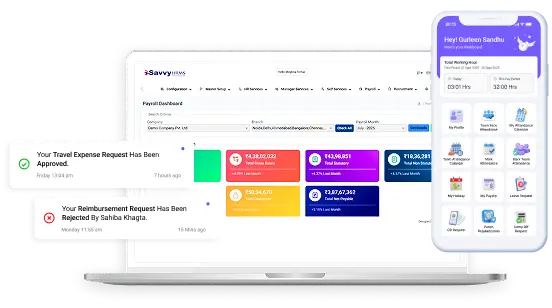
Savvy HRMS stands out as a leading asset management platform designed specifically for Indian organizations. Beyond traditional HR functions, Savvy HRMS integrates advanced asset management solutions that simplify resource allocation, equipment tracking, and organizational asset improvement. The platform’s user-friendly interface and complete feature set make it a perfect choice for organizations looking for an integrated asset and HR management system in a single system.
Key Features
- Integrated Asset Tracking Module: Merged dashboard with real-time QR code and tracking for automated asset allocation and complete audit records.
- Predictive Maintenance Capabilities: AI-powered scheduling predicts maintenance needs, automates deadline alerts, and integrates provider management with cost tracking.
- Advanced Reporting and Analytics: Customizable dashboards display performance measures, depreciation tracking, utilization reports, and ROI analysis for capital investments.
- Smooth HR Integration: Links assets to employee records, automates handovers during transitions, integrates with payroll software, and provides self-service portals.
- Mobile Accessibility: The Mobile app enables field-based scanning, offline operations, and real-time operation across all devices.
- AI-Driven Asset Optimization: Analyzes utilization patterns and predicts lifecycle trends to recommend improvement and resource reallocation strategies.
- Vendor Management Integration: Coordinates maintenance services, tracks warranties, manages contracts, and optimizes vendor relationships for cost reduction.
- Compliance and Audit Support: Automated compliance tracking generates audit trails and produces compliance-ready reports for regulatory compliance.
- Real-Time Cost Analytics: Monitors maintenance expenses, depreciation values, and tracks trends to identify cost optimization and support budget forecasting.
Pricing:
- Core Plan: ₹4,500/month (up to 50 employees)
- Edge Plan: ₹6,000/month (up to 50 employees)
- Additional Employees: ₹90–₹120 per employee/month
2. Pocket HRMS
Pocket HRMS offers a simplified and cost-effective asset management software solution tailored for growing organizations and SMEs. The platform delivers important asset management capabilities that scale with organizational growth while maintaining ease of use and quick implementation timelines.
Pocket HRMS provides:
- Efficient Asset Cataloging: Simple yet powerful asset classification with barcode scanning, categorization by type and location, and bulk import functionality for rapid system setup.
- Automated Depreciation Calculation: Automatic depreciation tracking with multiple method support, accounting module integration, and tax compliance features for correct financial reporting.
- Asset Request and Approval Workflow: Simplified approval process with budget tracking, automated notifications, and complete audit records for all asset-related transactions.
- Mobile-First Asset Management: User-friendly mobile app enabling real-time field updates, offline scanning with coordination, and geolocation tracking for asset movements.
- Real-Time Asset Analytics: Complete reporting on asset utilization, maintenance costs, and performance metrics to support data-driven decision-making and budget optimization.
Pricing:
- Standard Plan: ₹2,995/month (for 50 employees)
- Professional Plan: ₹4,495/month (for 50 employees)
- Enterprise Plan: Custom pricing
3. HR Mantra
HR Mantra provides complete asset management solutions covering the whole asset lifecycle from investment through disposal, with advanced search and compliance features. HR Mantra’s strong analytics and cost optimization features make it perfect for enterprises managing complex asset portfolios across various locations.
It is famous for its:
- Complete Asset Lifecycle Tracking: Track every asset stage from acquisition through disposal with warranty management, upgrade planning, and end-of-life documentation.
- Advanced Search and Filtering: Multi-level search functionality with filters by type, location, status, cost, and department, plus saved templates for quick asset lookup.
- Compliance and Audit Management: Automated compliance tracking with detailed audit records, verification reports, and export capabilities for internal and external audits.
- Cost Analysis and Optimization: Total cost of ownership calculations with record analysis, budget forecasting, and optimization recommendations for unused assets.
- Asset Performance Reporting: Complete dashboards displaying asset utilization measures, maintenance costs, depreciation values, and strategic insights for informed decision-making.
Pricing:
- Plans: Custom quotation based on organization size and required modules
4. Bamboo HR
Bamboo HR smoothly integrates people management with asset management in a merged asset management platform that links employee records with asset assignments. Bamboo HR’s customizable workflows and integration-ready structure make it perfect for organizations looking for a connected HR and asset management solution.
Top functionalities:
- Centralized Asset and Employee Records: A Single platform managing both employees and assets with linked records for clear ownership and automated transitions during employee lifecycle events.
- Customizable Asset Fields and Workflows: Flexible asset data models with custom approval workflows, automation rules, and template-based creation for faster implementation.
- Transparent Asset Visibility: Employee self-service portal for asset requests, transparent approval tracking, and real-time allocation visibility across departments.
- Integration-Ready Architecture: Pre-built integrations with accounting and ERP systems, API access for custom integrations, and smooth payroll connectivity with data coordination.
- Asset Lifecycle Automation: Automated workflows that activate actions based on asset status changes, employee transitions, and maintenance schedules for simplified operations.
- Complete Asset Reporting: Detailed dashboards displaying asset allocation by department, equipment inventory summaries, utilization measures, and financial tracking for strategic planning.
Pricing:
- Essentials Plan: Starts approx. at $10 per employee/month
- Advantage Plan: Custom pricing based on modules and employee count
5. Deel
Deel specializes in asset management software designed for distributed and remote employees operating across multiple countries and currencies. Deel’s compliance with international standards and remote-friendly operations make it perfect for organizations with global expansion plans.
What it offers:
- Global Asset Management Capabilities: Support for managing assets across multiple countries and currencies with compliance to international standards, multi-language interface, and localized depreciation rules.
- Remote-Friendly Asset Operations: Designed for distributed employees with digital asset delivery, virtual audit capabilities, and cloud-based accessibility from anywhere globally.
- Expense Tracking Integration: Link assets to employee expense management with automated reimbursement, payroll integration for deductions, and clear audit records for all expenses.
- Vendor and Contract Management: Centralized vendor management with automated contract renewal tracking, supplier performance metrics, and cost optimization through vendor comparison analytics.
- Multi-Currency Financial Tracking: Automatic currency conversion, localized tax compliance, financial reporting across regions, and consolidated asset valuations for global organizations.
Pricing:
- HR + Payroll: Starts at $29 per employee/month
- Contractor Management: $49 per contractor/month
- EOR (Employer of Record): Starts at $599 per employee/month
Conclusion
The right asset management system is more than a tracking tool; it’s a strategic investment in organizational efficiency and financial health. Whether you’re managing complex IT infrastructure, vehicle fleets, or facility assets, implementing a modern asset management solution transforms how your organization operates. The systems reviewed above represent the best asset management software options available to Indian organizations, each offering unique strengths for different organizational needs.
Among these various platforms, Savvy HRMS emerges as the perfect choice for organizations looking for integrated asset management capabilities within a merged HR ecosystem. By combining powerful asset tracking, predictive maintenance, and smooth HR integration, Savvy HRMS empowers organizations to maximize asset value while maintaining complete operational visibility. Its user-friendly interface, strong reporting capabilities, and commitment to Indian compliance standards make it the ideal asset management software for organizations ready to embrace digital transformation in 2026 and beyond. Choose Savvy HRMS and unlock the true potential of your organizational assets.