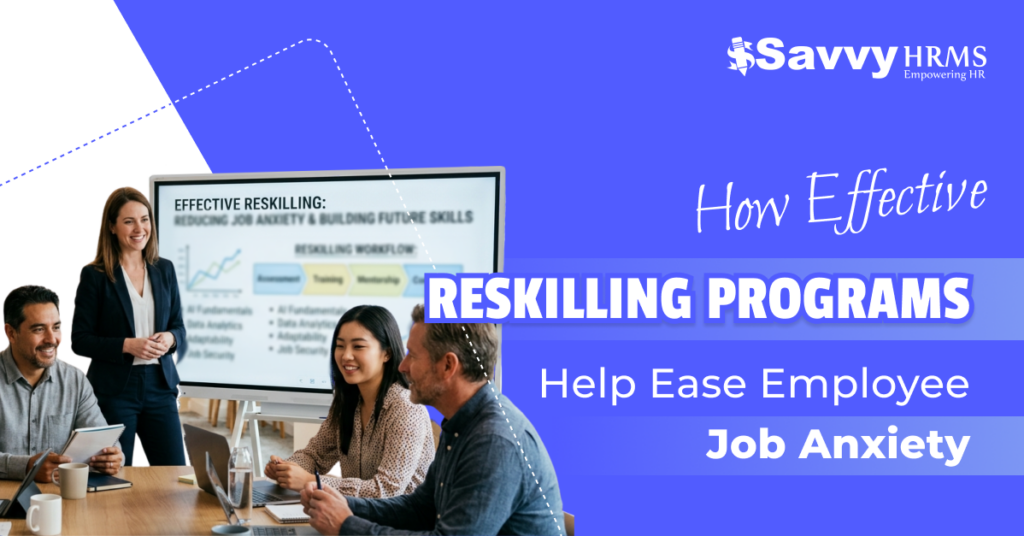
Have you ever watched your employees grow silently during periods of change? That silence often points to something deeper, employee job anxiety established in uncertainty about skills, roles, and relevance in a shifting workplace.
The modern organizations develop fast. Automation, AI, and restructuring are rewriting job descriptions overnight. Employees aren’t just worried about workloads; they are genuinely asking themselves, “Will I still have a place here tomorrow?”
Here’s the answer: organizations that invest in effective reskilling programs are converting that anxiety into confidence. When employees feel equipped to grow, fear hides, and performance grows. Let’s explore how.
What Is the Connection Between Job Anxiety and Skill Gaps?
Job anxiety doesn’t appear out of nowhere. More often than not, it’s deeply tied to skill gaps, the growing distance between what employees currently know and what their developing roles demand. When people sense that gap opening, stress follows naturally.
Think about it this way: if you were asked to perform a task you had never been trained for, wouldn’t you feel anxious too?
Key connections between skill gaps and anxiety:
- Employees feel underqualified when new tools or processes are introduced without training.
- Lack of career clarity creates fear of being replaced or made unnecessary.
- Absence of learning opportunities signals to employees that their growth doesn’t matter.
- Skill gaps lower self-confidence, making employees doubt their ability to perform.
- Unaddressed gaps create disengagement, which increases anxiety over time
Why Do Employees Experience Anxiety During Company Shifts?
Organizational change, whether it’s a digital transformation, a combination, or a restructuring, is one of the biggest issues of workplace stress and job insecurity. Employees aren’t resisting change because they are stubborn; they are anxious because they’re uncertain.
During company shifts, employees often wonder whether their existing expertise still holds value. They fear being left, overlooked for new projects, or replaced by someone with more present skills. Without open communication and proactive upskilling, that fear grows.
- Lack of communication leaves employees filling in gaps with worst-case assumptions.
- Sudden role changes without training feel threatening, not exciting.
- Employee comparison fuels insecurity when some colleagues adapt faster than others.
- Fear of failure in new systems discourages employees from even trying.
When organizations understand why anxiety occurs during conversion, they can design reskilling programs that address the emotional root, not just the technical gap.
What Are the Important Elements of Reskilling Programs That Reduce Anxiety?
Not all training programs are designed equally. The ones that actually reduce employee anxiety share a few powerful attributes. Here’s what makes reskilling truly work:
1. Personalized Learning Paths
General training often misses the mark. When employees receive personalized learning journeys tailored to their current skills and career goals, they feel seen, not just processed.
Does your current program treat every employee the same? Personalization points respect and help employees build confidence at their own pace.
2. Psychological Safety in Learning Environments
Employees need to feel safe making mistakes. A psychologically safe learning culture promotes questions, experimentation, and honest feedback without fear of judgment.
When learners aren’t afraid to fail, they engage more deeply. Safety accelerates skill achievement and reduces the anxiety of “getting it wrong.”
3. Transparent Career Mapping
Employees want to know where they are headed. Clear career pathways that connect reskilling to real growth opportunities replace uncertainty with purpose.
Showing employees exactly how new skills open new doors transforms anxiety into motivation. The purpose is to reduce the fear.
4. Manager-Led Support and Mentorship
Reskilling doesn’t happen in isolation. When managers actively support learning, through check-ins, coaching, and encouragement, employees feel backed, not ignored.
Have your managers been trained to recognize signs of learning anxiety? Kind leadership makes a measurable difference in reskilling success rates.
5. Continuous Feedback Loops
One-time training isn’t enough. Employees need ongoing feedback to understand their progress and feel confident in newly acquired skills.
Regular touchpoints, whether through assessments, colleague reviews, or manager conversations, keep learners on track and significantly reduce the question of self-doubt.
What Are the Proven Reskilling Program Models That Work?
Organizations globally have tested various approaches. Here are the models with the strongest track records for reducing workforce anxiety and building flexibility:
1. Group-Based Learning
Groups of employees learn together in a structured way, building both skills and peer community. The social element reduces isolation and anxiety significantly.
2. Blended Learning (Online + In-Person)
Merging digital modules with live workshops offers flexibility without sacrificing human connection, perfect for various workforces identifying skill transitions.
3. On-the-Job Microlearning
Short, targeted learning moments combined into daily workflows reduce confusion. Employees learn in context, which accelerates knowledge retention and reduces pressure.
4. Internal Mobility Programs
Instead of hiring externally, organizations identify internal talent and reskill for adjacent roles. Employees feel valued, reducing turnover anxiety and retention costs.
5. Mentorship and Shadow Programs
Pairing employees with experienced colleagues for structured shadowing builds practical skills while strengthening organizational trust, a key reducer of job anxiety.
6. Technology-Enabled Adaptive Learning
AI-driven platforms that adjust content difficulty based on performance keep employees in their ideal learning zone, challenged but not confused.
How Can the Impact of Reskilling on Employee Job Anxiety Be Measured?
You can’t improve what you don’t measure. Tracking the impact of reskilling programs on employee well-being requires both measurable data and expressive insight. A multi-layered measurement approach gives HR teams the full picture.
Start by combining pulse surveys, performance data, and absenteeism records. These signals together reveal whether your workforce anxiety is declining or still just below the surface.
The goal isn’t just skill achievement, it’s confidence building. When measurement frameworks capture emotional outcomes alongside technical ones, organizations can make smarter, more sensitive decisions about their learning investments.
Now let’s look at the specific metrics that reveal reduced anxiety in your workforce:
Key Metrics That Show Reduced Anxiety in Your Workforce
1. Employee Wellbeing Survey Scores
Regular pulse surveys that track stress, confidence, and job security insights reveal whether anxiety levels are declining post-reskilling.
2. Training Completion and Engagement Rates
High completion rates point to employees feeling motivated and safe enough to follow through, a strong indicator of reduced learning anxiety.
3. Internal Mobility and Promotion Rates
When reskilled employees move into new roles confidently, it confirms that skill-building is transforming into real career growth and reduced fear.
4. Absenteeism and Turnover Reduction
Declining absenteeism and voluntary exits are directly related to improved employee confidence and reduced workplace stress after reskilling investment.
5. Performance Review Improvements
Employees who feel furnished perform better. Upward trends in performance management give the idea of early reskilling, which validates the program’s success in job confidence.
6. Manager-Reported Behavioral Shifts
Managers observing more active communication, risk-taking, and collaboration signal that psychological safety and confidence have genuinely improved within teams.
How to Implement Anxiety-Reducing Reskilling Programs in Your Organization?
Ready to take action? Here’s a practical, structured roadmap designed to reduce employee job anxiety while building a future-ready workforce:
Month 1: Identify and Define
Manage a skills gap and anxiety audit before building anything, and listen. Run surveys, focus on groups, and one-on-ones to understand where skill gaps and fear are most concentrated across your workplace.
Set Clear Reskilling Objectives that define what success looks like, not just in skill terms, but in emotional well-being terms too. Connect your reskilling goals directly to business outcomes and employee confidence measures.
Months 2 to 4: Design and Pilot
Build Personalized Learning Frameworks using audit analytics, design role-specific learning paths that feel relevant and achievable. Avoid one-size-fits-all content that confuses different employee groups.
Start a Pilot Group: Test your program with a small, willing group first. Collect real-time feedback to refine content, pacing, and support structures before a company-wide rollout.
Train Managers as Learning Champions Equip people managers with the language and tools to support anxious learners. Manager buy-in is the single biggest predictor of reskilling program success.
Months 5 to 8: Scale and Sustain
Expand this program across departments systematically, prioritizing teams facing the highest levels of change or technological disturbance. Communicate timelines openly to reduce uncertainty and issues.
Merging microlearning into daily workflows makes learning continuous. Bite-sized learning moments integrated into existing tools and routines reduce the confusion that causes anxiety during large-scale training rollouts.
Months 9 to 12: Measure, Refine, and Celebrate
Track metrics and adjust in real time, using your defined KPIs, survey scores, completion rates, and performance data to identify gaps. Perfect program adjustments based on real feedback keep the initiative relevant and effective.
Celebrate milestones and identify growth never underestimate the power of recognition. Publicly acknowledging reskilling achievements reinforces confidence, signals organizational support, and reduces remaining anxiety about change.
Conclusion
Effective reskilling programs aren’t just about closing skill gaps; they are about restoring confidence, dignity, and hope in employees navigating an uncertain world. When people feel equipped, anxiety fades, and performance gets higher.
The organizations that will grow tomorrow are the ones investing in their people today. Tools like Savvy HRMS, with its strong performance management software, help HR leaders track reskilling progress, measure workforce wellbeing, and build data-driven learning cultures that truly reduce employee job anxiety at a large scale.